
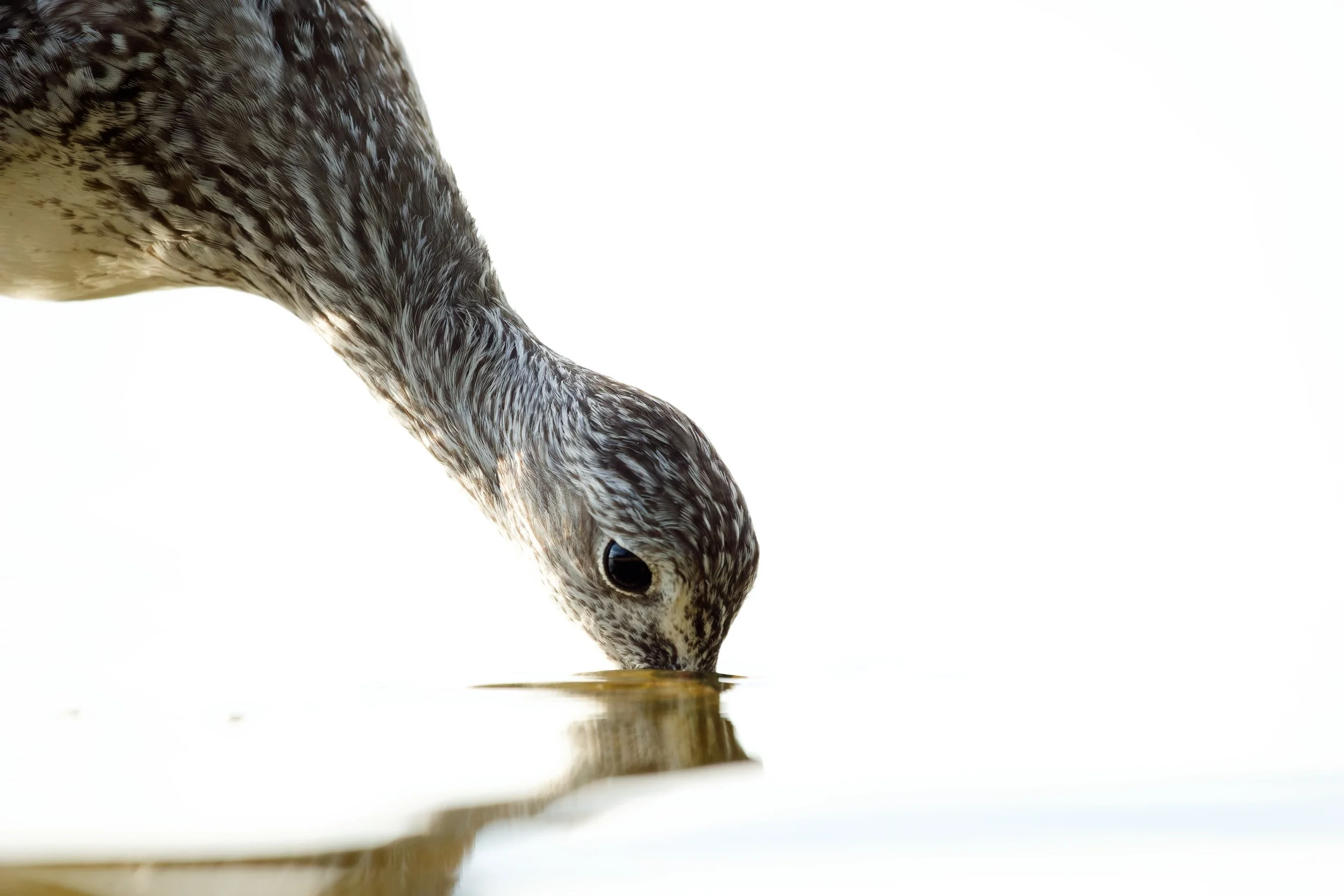
A lot of wildlife photography happens in a matter of seconds.
A bird suddenly takes flight. Bobcat appears along a stream. A deer raises its head. Something changes, and instinctively, you raise your camera and try to react quickly enough to capture the moment.
Sometimes it works.
But over time, I've found that some of my best wildlife photographs come from doing something very different.
Instead of constantly reacting to what an animal does, I try to anticipate what might happen next.
That doesn't mean I can predict wildlife. I can't. Wild animals are unpredictable, and that's part of what makes photographing them so rewarding.
What you can do is pay attention.
We can watch the animal's behavior, read the habitat, understand the conditions around you, and use that information to make better decisions about where we should be and what might happen next.
That is fieldcraft.
And I believe it is one of the most valuable skills a wildlife photographer can develop.
This is the reason I have developed new Fieldcraft Mini Sessions to help teach you the skills I have learned through the years. More information on this new service can be found at the end.
There is a tremendous amount of focus on gear when it comes to wildlife photography. Of course gear plays an important role, but it is not the main thing that determines whether you will be ready to get the photo when the duck flaps his wings, or when finding a good position to capture black bears in their habitat. The discussion about gear is a topic for another time.
Let’s delve into the core concepts of fieldcraft.
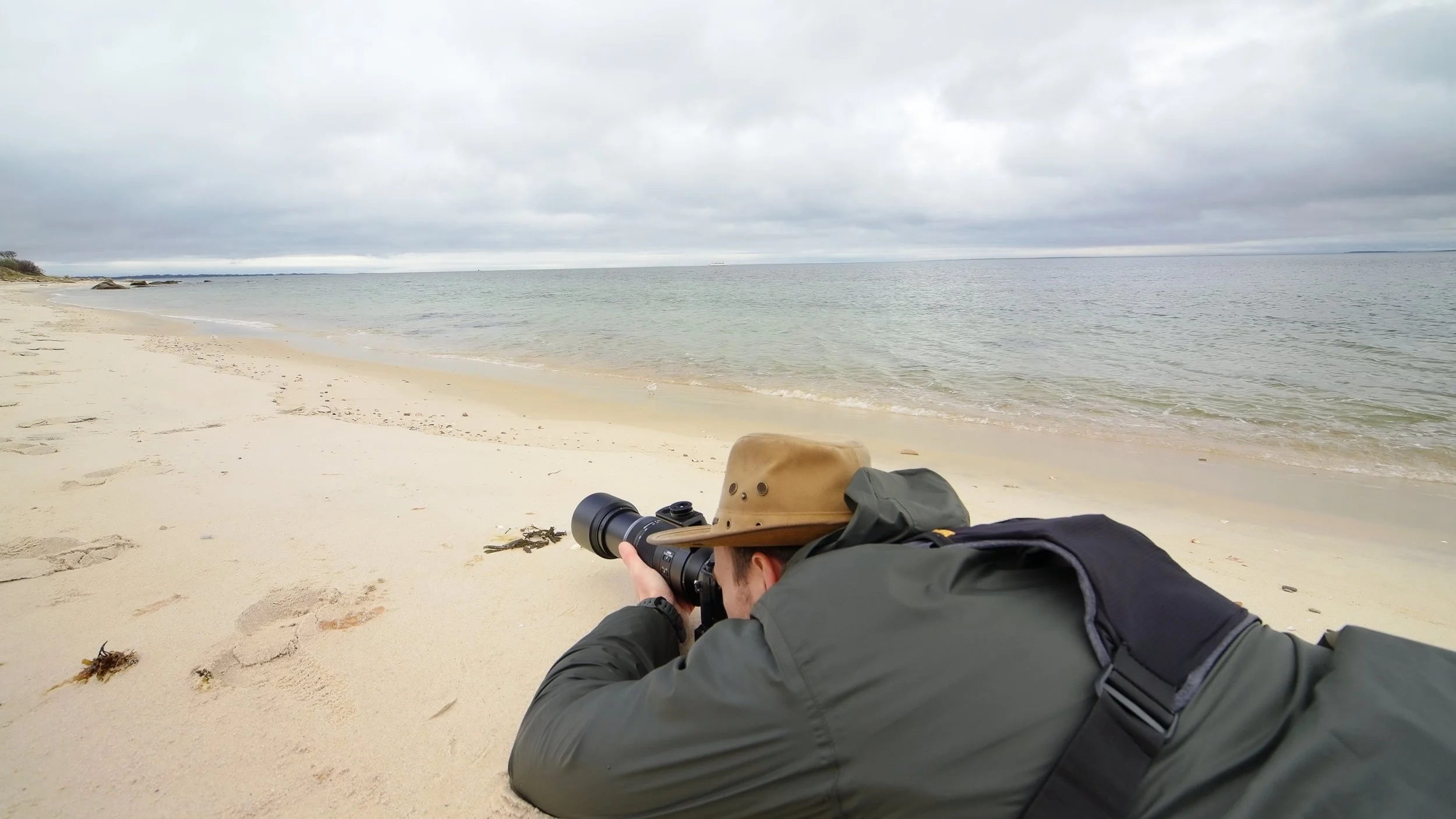
When photographing shorebirds, I always try to get down low to photograph the birds in their environment. In this instance, I noticed a pair of Piping Plovers foraging along the waterline. I got down low ahead of them, found the background I wanted, and waited. Before long the birds approached me. You can see one plover just above my lens, and the second one further down the beach. Had I tried to approach these birds, they would have likely flown off.
The photograph starts before you press the shutter
It's easy to think of wildlife photography as a reaction-based activity.
You find an animal, point your camera at it, focus, and wait for something interesting to happen.
But there is actually a tremendous amount of information available to you before you ever take a photograph.
What is the animal doing?
Where is it looking?
Is it feeding, hunting, resting, or preparing to move?
What is the wind doing?
Where is the light?
What does the habitat look like?
Are there particular areas where the animal seems to spend more time?
Where are the clean backgrounds?
Where could you position yourself to create a better photograph?
These questions may not seem directly related to camera settings, but they can have a much greater impact on the final photograph than changing another setting in your camera menu.
The more information you can gather before the moment happens, the more prepared you are when it does.
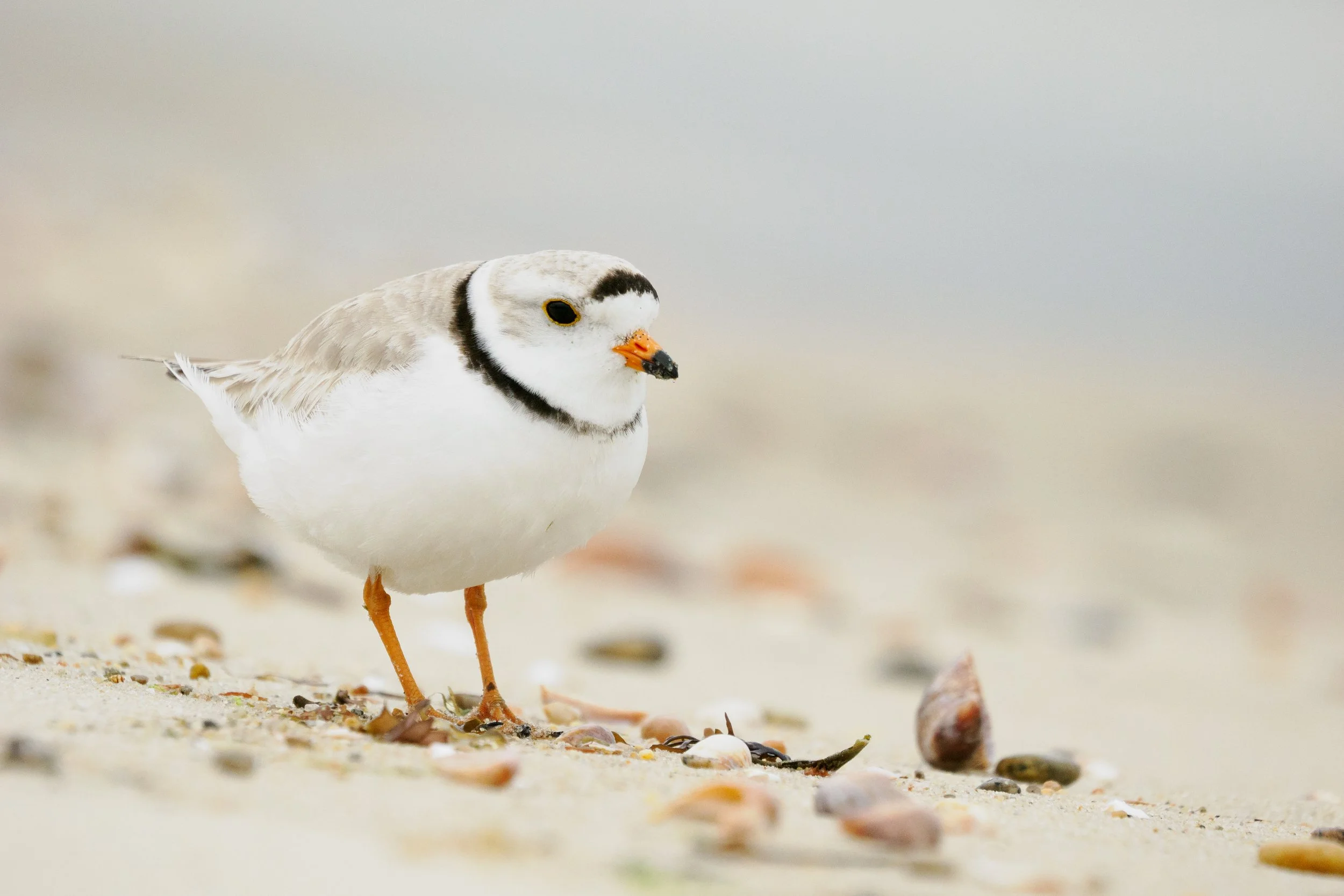
The resulting image from my above position. The birds were relaxed and continued foraging even though they were very close to me.
Positioning yourself for Wildlife
In previous blog posts I have discussed things to look for when finding a potentially productive location for wildlife photography. Rather than rehashing them again here I will hit them quickly so we can all be on the same page. You can visit the articles in their entirety here if you would like more detail.
“Stop Searching for Wildlife, Start Learning Where to Find It”
“Why Sitting Still Can Make You a Better Wildlife Photographer”
The main things to think about when finding productive wildlife locations has to do with learning as much about the subjects you want to photograph as you can.
Where they live
What they eat
What shelter they use
Where are water sources
Are they here all year or do they migrate or hibernate
How do they move around the landscape?
All these things will allow you to more easily identify where you are more likely to find those subjects.
Then from there you can find a likely spot, sit, wait, and let the magic happen.
Of course it is important to note that this is only a short list of information you can learn about your subjects. You can dive even deeper, but this is a good spot to start.
Pay attention to behavior
Now that we have the subject in front of us, the first thing I try to understand is the animal itself.
Before immediately starting to photograph, I like to spend a little time watching.
And this is also when that time spent researching your subject helps as well. During your research, finding information on the animal's behavior can help you see clues to what the animal is doing in front of you and, in some cases, help you anticipate what the animal will do next. That word anticipate is important!
It might mean noticing a bird repeatedly using the same perch, a woodpecker continuing to return to the same tree to find insects, or a deer continuing to look in the same direction when they raise their head.
These observations can provide you clues as to what may happen next and allow you a chance to get yourself in the best position possible to get photos of that animal.
Wildlife when left undisturbed often follows predictable patterns of behavior. If a bird has flown from one perch to another several times, there is a possibility that it will do it again.
A great example of this was when I was watching an Eastern Phoebe foraging for insects over a forested brook. There were many grape vines there hanging over the water from the large trees above, and the phoebe would land on these vines after flying out to capture insects. Noticing this, I got myself into position along the brook, and waited. Sure enough the phoebe landed there again providing me the opportunity to get the photo.
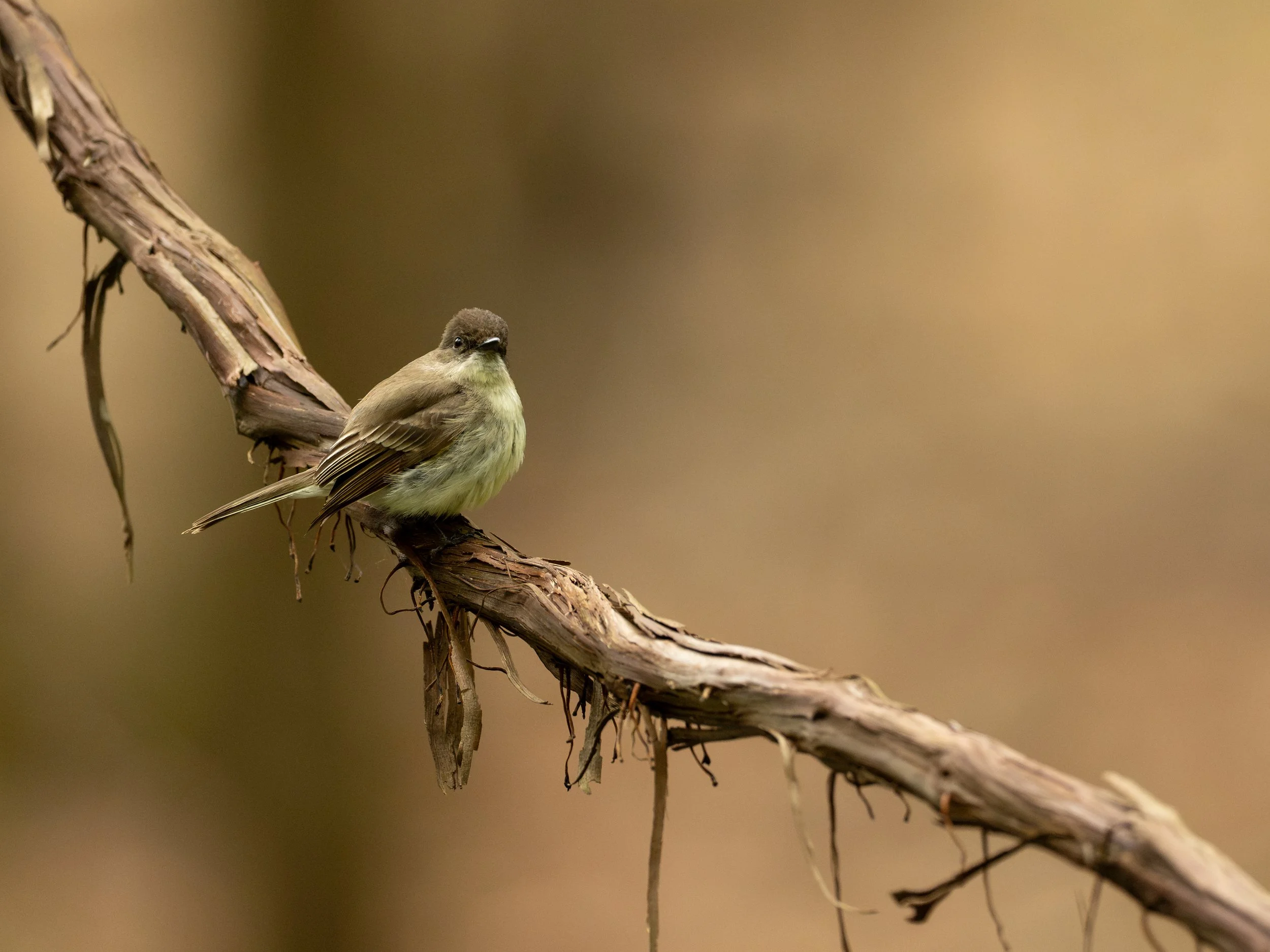
Eastern Phoebe perched on grape vine.
In another example, if a raptor is hunting a particular section of grassland, there may be a reason it keeps returning to that area. Perhaps that is where it is more likely to find its prey?
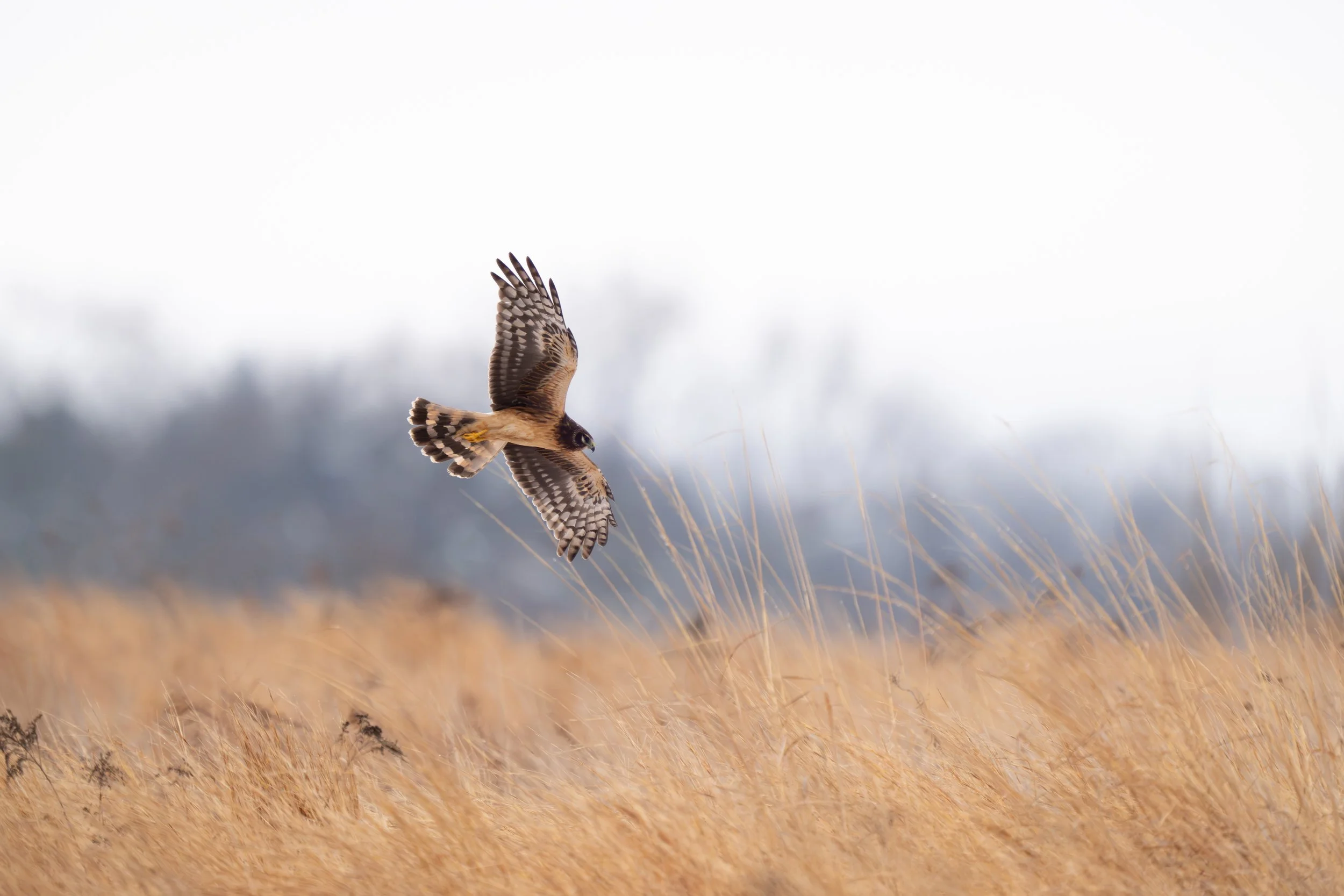
This Northern Harrier continued to visit this same area of the grass. I noticed this and approached while the bird was in a different location. Because I spent some time observing how the bird entered the area, I got myself in position and waited. Sure enough, the bird returned allowing me to get a nice sequence as they flew in. I later found out a carcass was in the grass and the birds were scavenging on it.
If an animal begins behaving differently—looking around, changing its posture, becoming more alert—that may be a sign that something is about to happen.
By taking it slow, observing behavior and keeping an eye on how the animal is reacting, you have a much better chance of getting yourself into the correct position to capture that behavior, rather than needing to reposition multiple times increasing the chance of spooking the wildlife. These few minutes of observation allow you to plan what to do next.
Read the habitat
Wildlife is so in tune with their environment, it can be amazing to watch. They are not separate from the forest and field around them, they are part of it. They hear the branch breaking in the forest, they see the ripples in the water.
Wildlife uses specific habitats for a reason. They feel safe in these areas, and these areas provide what they need to survive.
As photographers, it is important that once we locate an animal, that we don’t ignore the rest of the surroundings around the animal.
Oftentimes it is easy to become fixated on the subject and start taking photos, ignoring that there may be a better spot to position yourself only a few feet away that would make the image stand out.
Beyond simply looking at the animal, what other things am I looking at to help me get the photo?
Where are likely travel corridors?
Where are food sources?
Protected areas that provide shelter for subjects?
Are there any openings that provide good visibility?
Likely perches?
Where is the background good?
Where is light going to benefit?
Looking at these things can help you anticipate where best to position yourself. And all these things can be identified by looking around at the habitat surrounding the subject.
Instead of simply following an animal around trying to force an image, instead when you notice the animal, look around at the surroundings, it becomes much easier to find areas where you can position yourself so that the animal can naturally move into an area to provide better compositions.
Notice that nothing so far has come down to what gear you have.
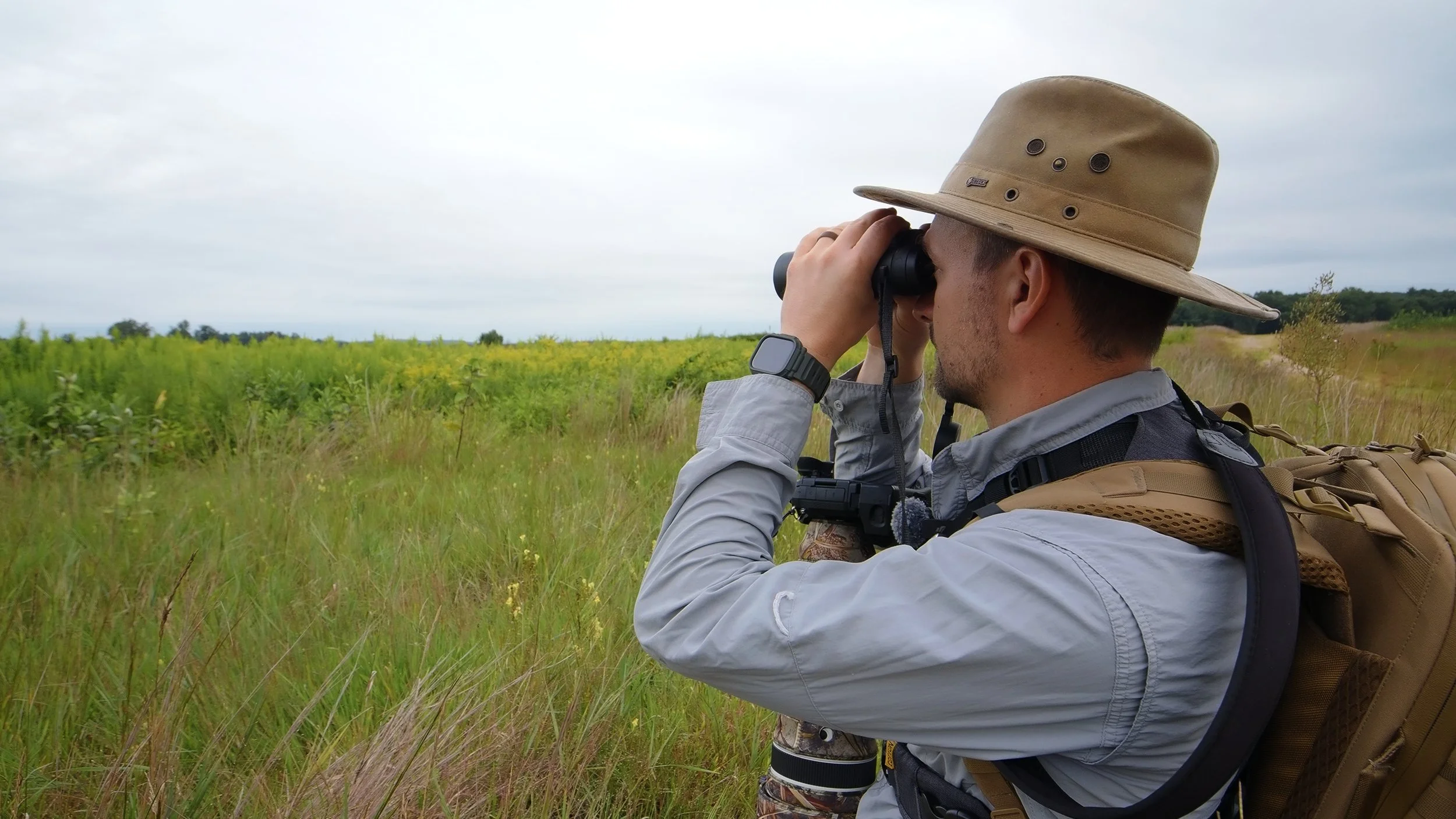
Taking some time to observe where the wildlife activity is and looking for good compositions can help you better utilize your time in the field.
Think about where you need to be
Now that you have observed what the animal is doing in front of you, and looked at the environment around the animal, now comes that part of actually making images.
Recognizing direction of travel and travel corridors becomes especially important here. Rather than trying to approach an animal, especially mammals, I try to position myself ahead of where the animal is moving. This may mean backtracking and looping around where the animal is to be able to get ahead of them, or it could mean just moving a few feet to your left and waiting quietly.
As you become more familiar with the location you're photographing you can learn to anticipate where subjects are likely to move. Looking at the terrain on topographical maps can also help here.
I remember a time when I located a black bear moving through the forest ahead of me on a trail. I was a good distance away and the bear was moving perpendicular to me. I looked on the map and noticed the bear was heading towards a small valley that filtered down through the forest. I followed this low valley on the map, backtracked and positioned myself at the bottom portion of that valley where it flattened out. After about 15 minutes, the bear appeared and ended up walking in my direction foraging on grasses along the way.
If I had approached the bear when I had initially located them and tried to approach from behind, I am almost certain the bear would have taken off through the forest and left the area.
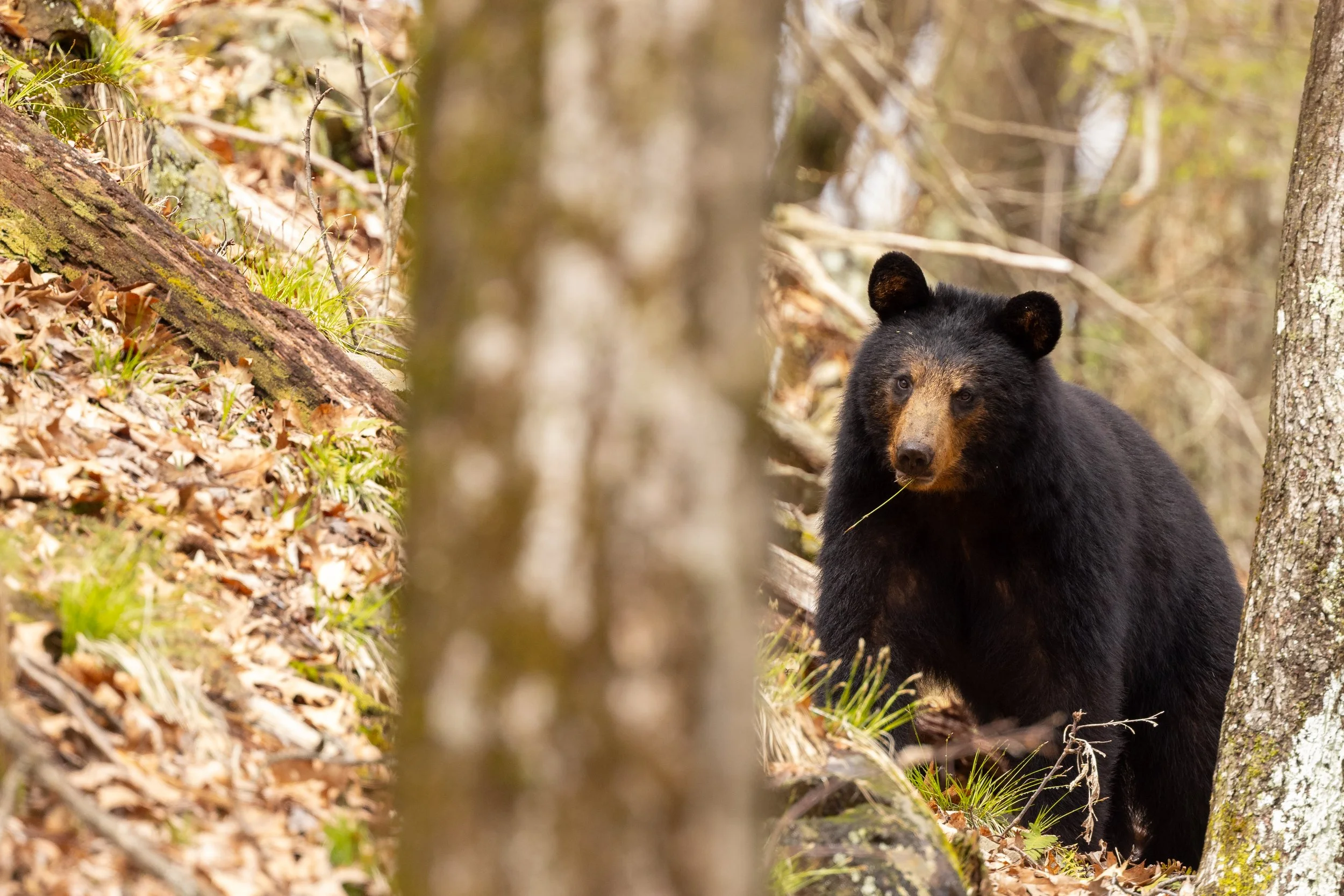
Being able to position yourself ahead of where the wildlife is moving almost always results in more natural and relaxed encounters, as was the case with this bear.
Of course there is always the chance the animal can move in another direction rather than taking the travel corridor you anticipated. That is always a risk when you adjust your position and end up losing sight of the subject in the process. But being able to position yourself ahead of where the subject is traveling to, and letting them approach you almost always leads to better opportunities and more relaxed behavior.
The important thing to remember is that the animal is always in control, and they can decide if they want to approach or not.
A concept I have introduced in another post is the idea of setting up and waiting where the wildlife currently is not. This allows you to set up without disturbing the wildlife, and then the wildlife can approach you on their own terms. This works remarkably well with waterfowl, and is also advised with many mammal and more skittish subjects.
Imagine you visit a local pond and see a large flock of ducks all foraging in one section of the water. You could try to approach these birds, and likely cause them to fly off, or you could use this information to set yourself up for success in your next outing. Instead of flushing the birds when you first see them, you sit and watch, observe what they are feeding on, and locate possible good places in that area to set up. Then return the following day, when the ducks are not in the area, and get into position, sit and wait and let the ducks come to you.
You are already in position when the ducks first start to come towards you and now you can let them come. You let the first ducks approach without even taking a photo, allowing them to remain calm and using these ducks to help bring in more subjects closer. Now the ducks are relaxed and acting naturally and you can slowly work on creating images of the subjects in front of you.
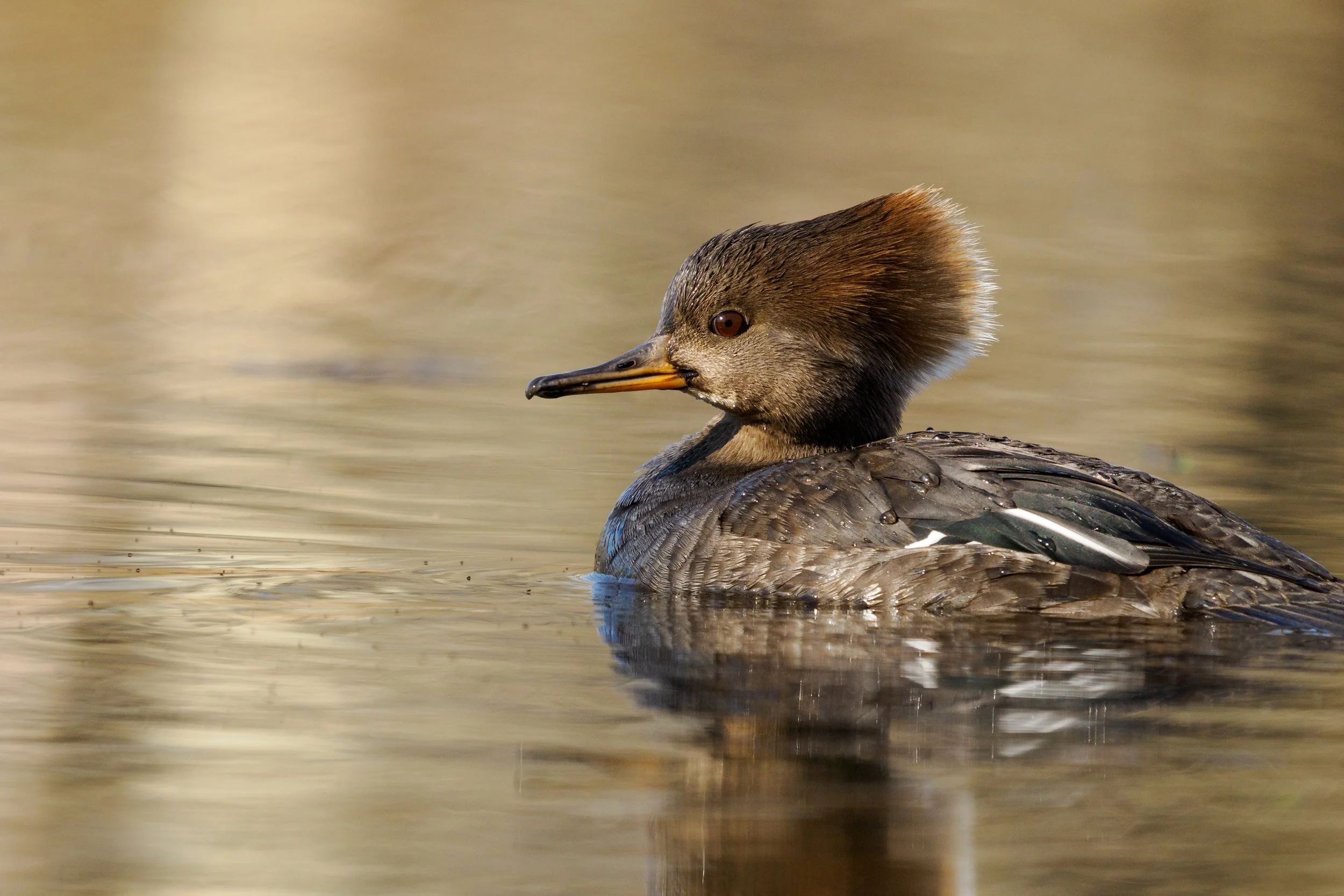
Female Hooded Merganser
This is the closet I have ever gotten to this species. And I achieved this by sitting and waiting in a corner of water where I had seen them before. When I set up, there was not a single duck on the water, but after a little time, a mallard flew in, then a male hooded, and soon there was a raft of about 12 ducks on the water in front of me and they were all foraging and moving towards me. I was already in position, so all I needed to do was wait.
Notice the difference?
No rushing in, no causing the subjects to flee. Just observation, leading to more productive outings.
Now this is not to say that this works all the time. You can watch animals acting and being in a certain location one day and they are somewhere completely different when you return, this is wildlife after all.
There is no guarantee the subjects will act the same as they did previous days, but you have increased your chances if they do. After repeated attempts with this approach, you will get results.
Learning to recognize animal behavior and this behavior's relationship to the environment, you also begin to develop a better sense of the animals' connection to the habitat. What they are eating, how they use the landscape, and you can then include that behavior and those habitat elements into your images.
And it is this kind of approach that can help to set your photos apart from others.
This applies to more than rare wildlife
You don't need to travel somewhere exotic to practice these skills.
In an upcoming Tips Tuesday Video I talk about how practicing with common species can really help you to quickly improve your wildlife photography.
There are some obvious advantages to photographing species that are abundant around you.
In most cases they are easier to approach.
They are easier to locate.
You can try different approaches.
You can practice a lot in one outing.
Take the tufted titmouse for example. A very common bird in the Northeast. They can be found in most backyards with feeders, the forests, streams, along the coast, pretty much everywhere. They are so common that many times they are overlooked by photographers, looking to instead try to photograph something they don’t typically see. This is fine, but in many cases you are walking past a treasure trove of possibilities to improve your photography.
Having a subject that is around you and easy to locate, makes them a great candidate to practice field craft. You can learn techniques of how to approach them, observe how they move around the landscape, and work to be able to anticipate their next move all in a low stress, low stakes environment. If you position yourself to try to get ahead of the common subject, and they go a different direction, it is not the end of the world. Learn from it and adjust next time. You're likely to locate another common subject a few minutes down the trail.
This doesn't just allow you to practice field craft, you can also practice with different light, different backgrounds, and other camera techniques. You will also become quicker at adjusting camera settings on your camera as well when lighting or movement changes. Eventually with enough practice, you will also be able to learn to anticipate what an image will look like before you even raise your camera. This allows you to position yourself much better to get the images you are envisioning.
Another huge point to this is that if you can get a compelling image of a common species, it becomes much easier to be able to do this with a more rare or exotic species. You will have already practiced the techniques, the camera settings, practiced with lighting and background, and anticipating behavior, so every subsequent experience becomes easier and you are able to act without thinking.
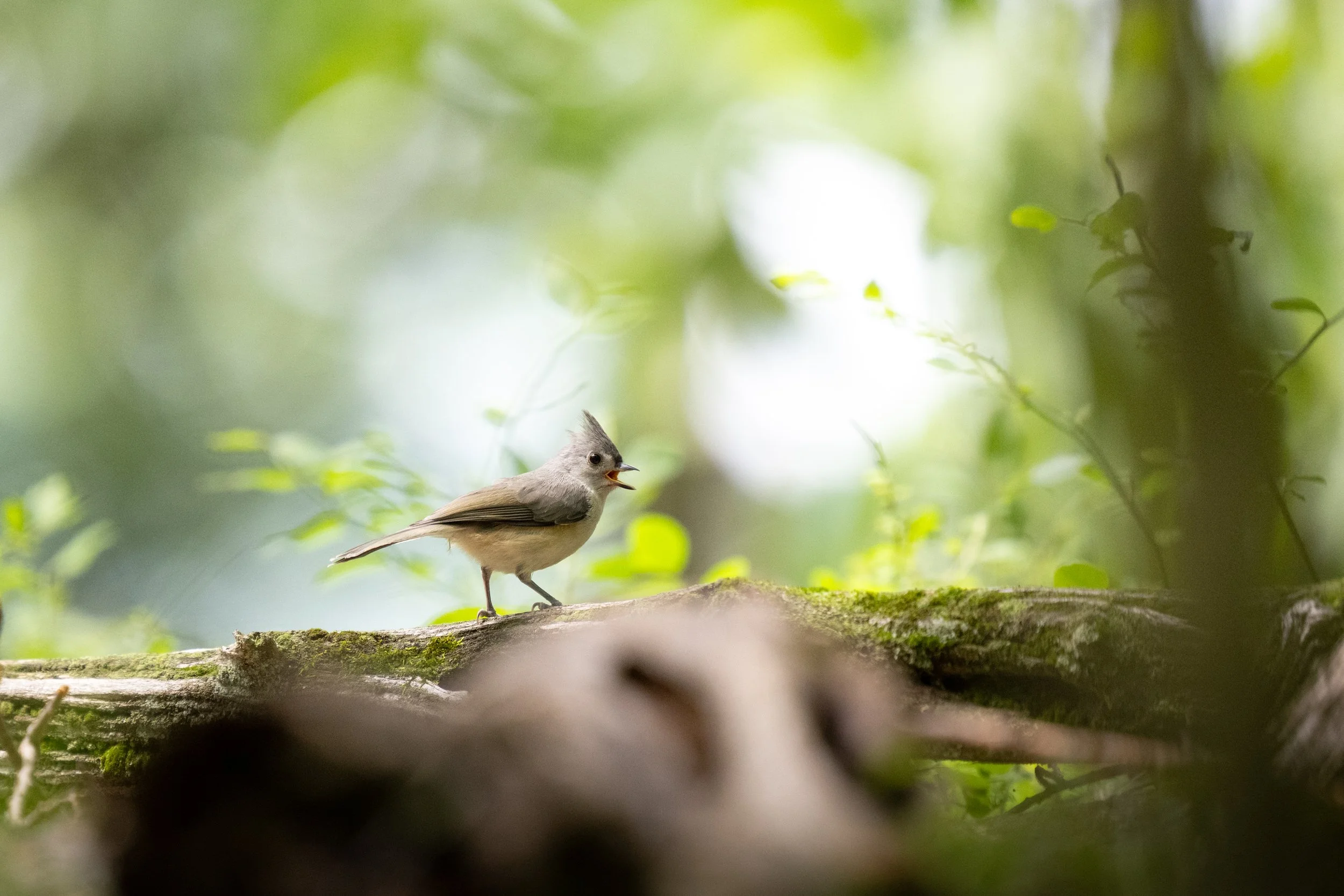
A Tufted Titmouse foraging along the forest floor. These little birds are always on the move and watching them can teach you a lot about bird behavior even though they are very common.
Fieldcraft is a skill you can carry with you
Camera technology continues to improve.
Autofocus gets faster. Sensors get better. Cameras become more capable.
Those things are useful.
But technology can't tell you where you should stand.
It can't tell you when an animal is about to change direction.
It can't understand why a particular section of habitat is important to the animal you're photographing.
And it can't replace the experience of spending time in the field and learning how wildlife behaves.
That's why I put so much emphasis on fieldcraft.
The goal isn't simply to get better photographs during one particular outing.
It's to develop a way of thinking that you can take with you wherever you photograph wildlife.
Observe. Understand. Position. Anticipate. Photograph.
The photograph is the final step.
The real work often happens before you ever press the shutter.
Taking fieldcraft into the field
This philosophy is at the heart of my Fieldcraft Mini Sessions in Central Connecticut.
These sessions focus on looking at the larger habit level to help you identify where wildlife is likely to be found, looking at observing wildlife to allow you to get in the best possible location, and learning to understand wildlife behavior.
These 3 hour private sessions are designed to provide focused topics that you can take with you in the field long after the session.
It's the same approach I use in my own wildlife photography.
If you’re looking for a more in-depth approach to fieldcraft, I still have spots available for my Northern Harrier Field Workshop.
This workshop isn't simply about finding Harriers and photographing them.
It's about spending a full day learning how to read the grasslands, understand wildlife behavior, recognize opportunities, make better positioning decisions, and anticipate what might happen next.
Stop reacting. Start anticipating.
Something Exciting is Coming!
I will be releasing new workshops for 2027 in the coming weeks. These workshops will focus on waterfowl photography as well as a workshop focusing on black bears. If you are interested, contact me to be placed on an early list to learn when these workshops are released.
See you in the field!
-Todd