
Backyard Bird Photography:
Stay Sharp When Winter Keeps You Close to Home
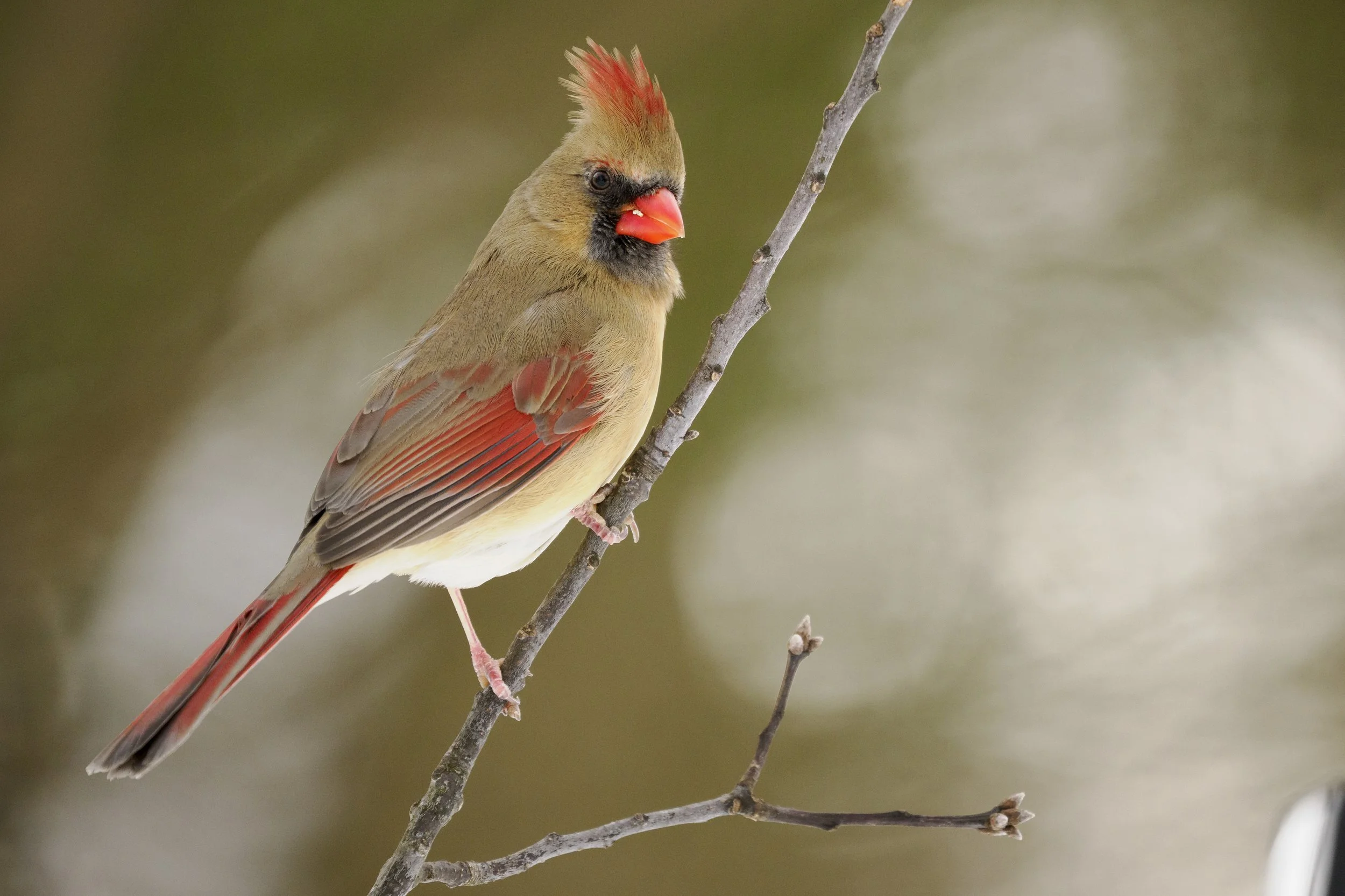
Female Northern Cardinal (Cardinals cardinals)
OM-1 Mark II 150-400mm f/4.5 Pro
400mm f/4.5 1/1600 ISO 1000
It is easy to feel in a rut in the cold winter months. If you live in the Northeast like I do, then you are likely buried under deep snow, below freezing temperatures, and wind chills that make even short outings uncomfortable. Accessing your usual wildlife photography locations can be difficult.
When this happens, it’s easy to feel stagnant, or even rusty, with your photography. But it is important to remember that you do not need to travel long and far to have great encounters with wildlife photography, specifically bird photography. Some of the best opportunities may be closer than you think.
Setting up a Backyard Bird Photography Setup
Your yard does not need to be large or elaborate to have an effective backyard bird photography setup. You may even be able to set something up where you do not even need to leave your house, you can just open a window and shoot from there!
There are many ways to approach backyard bird photography, but most fall into two broad categories.
You can choose to set up a feeder, and photograph the birds as they are on the feeder, a very simple and effective setup. Or you can go the more in-depth and elaborate avenue where you set up feeders along with specific perches laid out in a manner to increase the chances of the animals landing and using particular perches.
I tend to find myself in the middle of these two avenues. Personally I don't like to have human elements in my images, so I choose to not photograph the birds as they are on the feeders. Instead I photograph them on branches and trunks nearby as they wait to go to the feeder. If there is a downed tree branch in the yard, I will likely spread some seed around that as well to make it more likely the birds will land on the branch, to create a small perch.
The keys to remember here are that you want to set yourself up in a manner where you are able to be close to the birds to get the birds the desired size in the frame based on what lens you're using, all the while not scaring them from coming to get the food.
I have found that as the birds become more familiar with the food being placed in the feeders, the more comfortable and tolerant they become as you sit outside nearby. Many times it will only be a few minutes before activity resumes at the feeders after you settle.
Backyard setup Checklist
Feeder placed near natural perches
Clean background behind perches
Distance matched to focal length
Window, blind, or natural cover for concealment
Consistent feeding times
Some species are more tolerant of humans than others, and some species may require you to conceal yourself in some way before they will come visit the feeder and act naturally again.
Benefits of Backyard Bird Photography
There is a long list of benefits to photographing the birds in your backyard. I am going to elaborate on a few of what I feel to be the most important things, and then list out the other more obvious benefits.
The Camera Becomes an Extension of your Hand
The number one benefit related directly to photography, is that the more time you spend behind the camera, the more the camera will feel like an extension of your hand, rather than a foreign object. This is especially true when the cold weather may be keeping you inside. The ability to go out for even a half hour to an hour at a time is still time where you have the camera in hand. This time spent with your camera allows you to feel more comfortable with adjusting settings, knowing where buttons are on the camera, and what the buttons do. This increases your ability to adjust settings all while keeping your eye on the viewfinder. All these things will translate to greater success in the field, in a moment when any hesitation will result in a missed shot.
Learn and Anticipate your AF settings
Practicing in your backyard also gives you valuable time to learn how your camera—and especially your autofocus—behaves. Because the environment is low-pressure, you can experiment freely and see how different AF settings respond to real movement.
Over time, this helps you anticipate which settings will work best in the field, where decisions need to be made quickly and hesitation often means a missed shot.
Creative Freedom to Try New Techniques
The low stakes nature of backyard bird photography also gives you the creative freedom to try new techniques or shooting modes. You may be able to try slow shutter speed techniques, or practice high-key photography with the bright white snow. Having practiced these skills at home, will allow you to add them to your tool kit to bring out in the field with you.
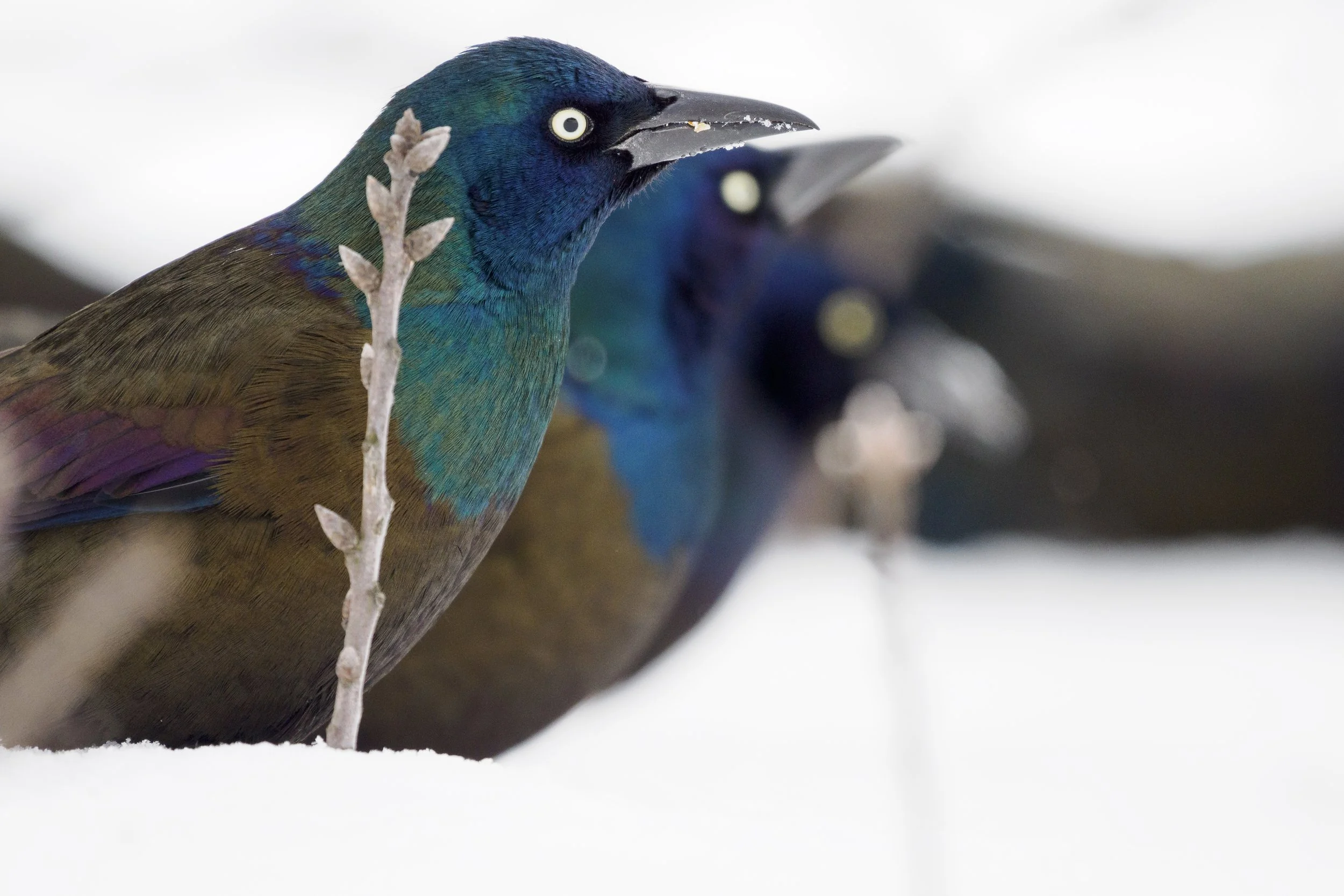
Common Grackles (Quiscalus quiscula)
OM-1 Mark II 150-400mm f/4.5 Pro
500mm f/5.6 1/1250 ISO 1000
Learn Wildlife Behavior
The more time you spend near wildlife, the more you can learn from them. Photographing the local birds allows you to learn their songs and calls, allows you to watch their behavior up close and how they interact with others of the same species and other species. When a predator arrives, you can see and hear how they react. All of these things translate to giving you more opportunities in the field, and the lessons that you observe in your yard, can often be transferred to other species as well.
The Advantage of Proximity
The obvious proximity to photographing your yard birds means you are able to test out different composition techniques, and also head out at different times of day or different weather conditions. This practice will help you to anticipate good compositions out in the field.
Other advantages:
Helps build a portfolio
Helps learn wildlife filming techniques
Practice, Practice, Practice
Final Thoughts:
It doesn’t just need to be cold and snowy outside to photograph the birds and wildlife in your backyard. I urge you to take some time photographing the wildlife in your yard during all seasons. I am sure you will be surprised as to what you may find!
Key Takeaways:
Benefits of photographing wildlife in your yard:
Learn to use your camera
Learn autofocus and exposure settings
Learn new techniques
Observe wildlife behavior
Test different lighting and composition techniques
Builds a portfolio of work
Ability to practice when conditions are not favorable
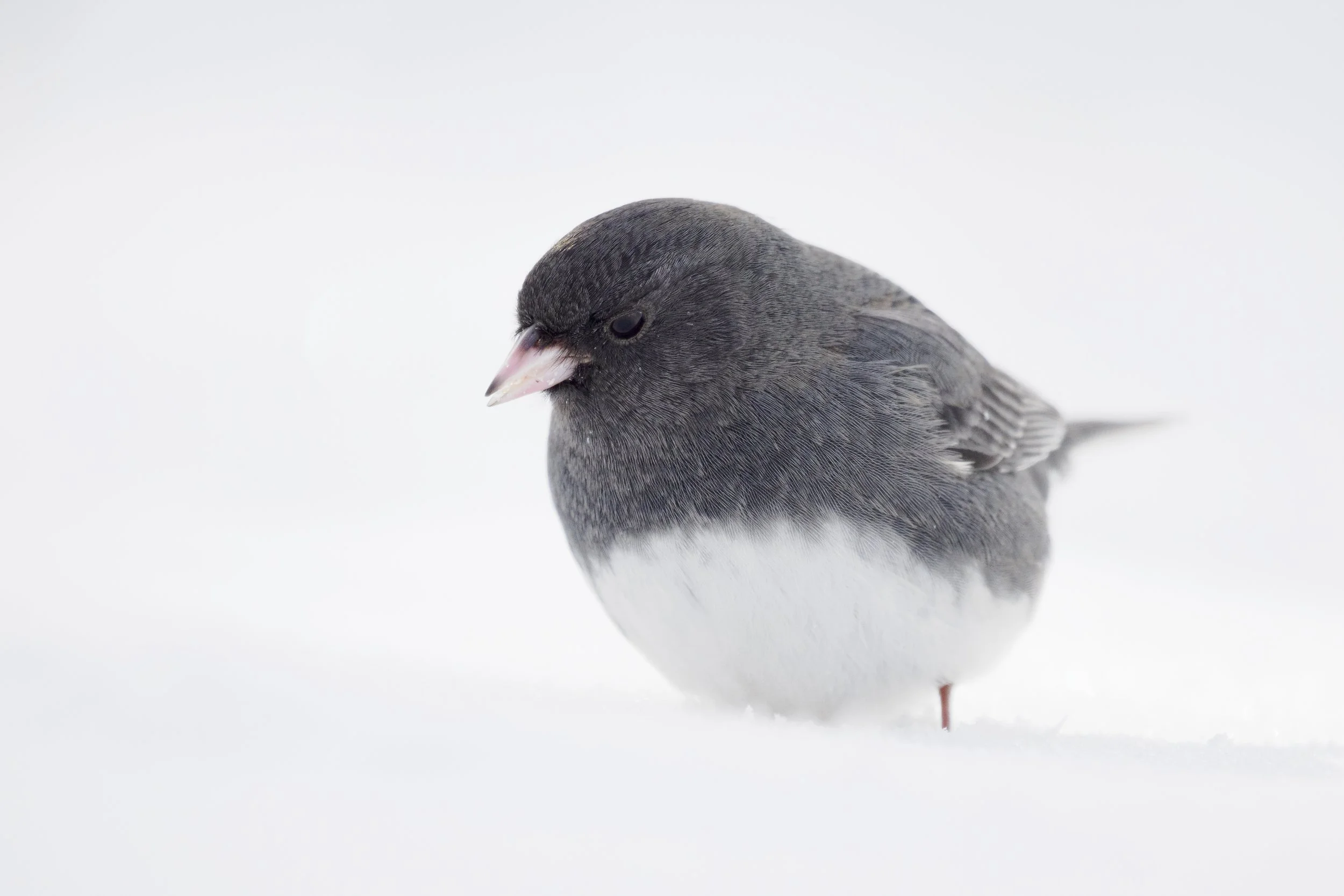
Dark-eyed Junco (Junco hyemalis)
OM-1 Mark II 150-400mm f/4.5 Pro
500mm f/5.6 1/1250 ISO 1000
Watch It in Action
If you want to see me out in my yard photographing birds, check out my YouTube Video. You will see first hand how I create a simple backyard photography setup.
If you haven't already, please consider subscribing to my Youtube channel and signing up for my monthly newsletter, The Wildlife Lens: Field Notes & Gear Tips, where I share observations from the field, behind-the-scenes lessons, and practical photography tips throughout the year.
For photographers who want more direct feedback—whether it’s dialing in camera settings, composition, or shooting strategy—I also offer one-on-one coaching calls.
Until then-
See you in the field,
Todd