
Wildlife Photography During Active Snow: Focusing Techniques That Work
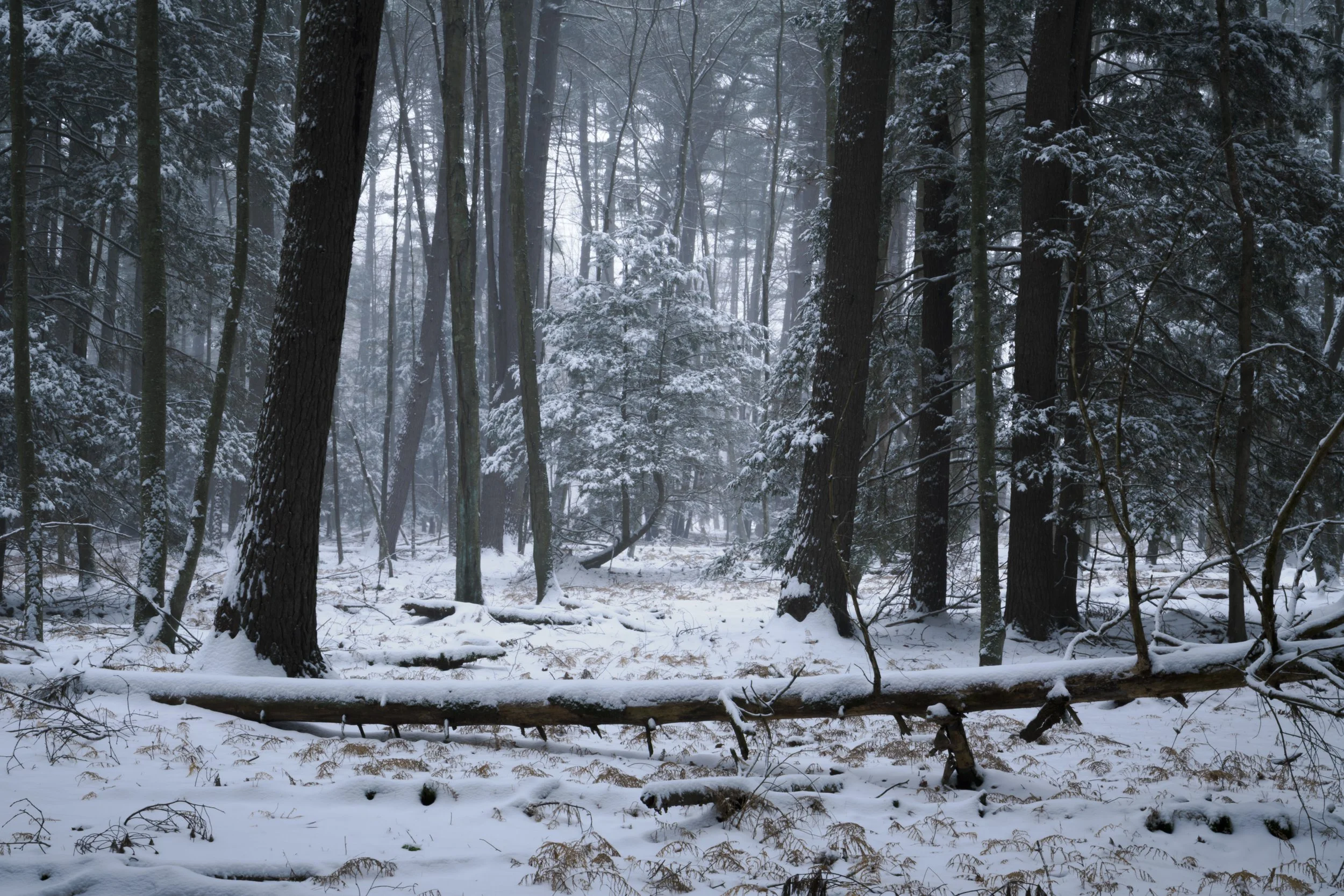
The air is crisp, the sky is gray, and there is a stillness in the forest. The first snow is falling quietly through the canopy, hitting the needles of the large white pines and hemlocks above. The snow bounces off the dried leaves still being clutched by some oaks and beech trees making an almost hissing sound. The snow begins to bury the ferns that have since turned a golden brown in the understory.
Being out in the forest while it is snowing is a wonderful experience. Much like when it is raining, there is a hush that comes over the forest, a stillness that makes it easier to appreciate the details of the landscape.
The birds’ songs of summer have long since moved south, but the calls of blue jays, tufted titmouse, black capped chickadee, and various woodpeckers can still be heard as they move through the forest in the constant search for food.
The snow, while beautiful, provides for some unique challenges when it comes to photography, especially when achieving accurate focus.
The Challenge of Autofocus in Falling Snow
With active snow falling, autofocus systems can struggle. As snowflakes fall between your lens and the subject, focus can be pulled away at the worst possible moment. This can lead to the frustration of missed shots in great conditions.
Understanding how to adapt your focusing techniques in these conditions can be the difference between getting the shot and coming home with a card full of out of focus images.
Using Back-Button Autofocus to Your Advantage
I use back button autofocus on my cameras, this is just what works for me, and while I won’t debate if that is “right” or “wrong”, using back button autofocus has serious benefits when photographing in the snow.
By assigning autofocus to the AF-ON button, you can:
Use continuous autofocus when the button is pressed and held
Use single autofocus when the button is pressed and released
This allows you to switch between tracking and single focus modes instantly without changing anything.
This becomes immediately apparent when it is snowing, and to a lesser extent when it is raining. The flakes can very easily create interference and distract your camera's autofocus. Oftentimes the camera will initially lock onto the subject and then wander onto a falling flake. If your autofocus is attached to the shutter button this will often mean a missed shot at the worst possible moment.
With back-button autofocus, you can avoid that frustration.
Pulsing Autofocus for Stationary Subjects
In instances with snow falling, rather than holding down the AF-ON button to use continuous focusing, try pressing and releasing the button to engage single autofocus and activate it in a pulsing mode. This works really well in instances with a stationary or very slow moving subject.
Here's how it works:
Press and release AF-ON to attempt focus
Repeat as needed until focus is confirmed
Release the button when focus confirmed and take photos
I have found that in many cases with the OM-1 Mark II, the camera is very good at initially accurately acquiring focus on the subject through the snow. By pressing and releasing the AF-ON button, you will be reducing the tendency of the camera to lock onto a flake.
As long as the subject does not move from the plane of focus, the subject will remain in focus and you can take your photos without worrying that the camera will suddenly lose focus on the animal.
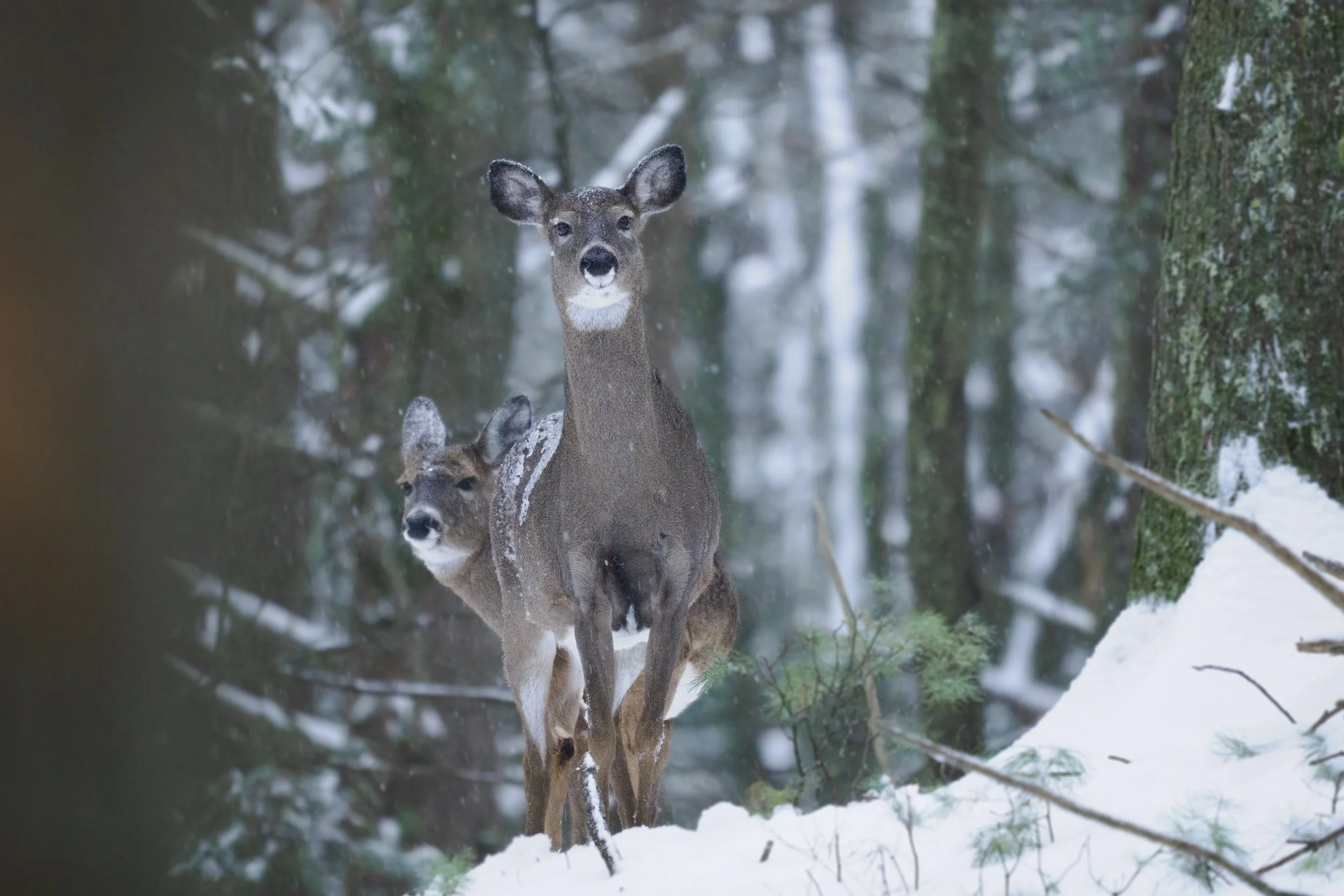
A pair of White-tailed deer (Odocoileus virginianus), standing on top of a hill. Light snow/ sleet made using the pulsing method possible.
378mm f/4.5 1/320 ISO 4000
When to Switch to Manual Focus
In heavier snowfall or with larger flakes, even pulsing the autofocus can struggle. This is where reverting to manual focus can be the most reliable solution.
Using manual focus puts you in control and greatly reduces the autofocus pulling unnecessarily away from the subject.
Tip:
If your camera has focus peaking, turn it on.
I typically use:
Medium or normal intensity settings
Red peaking color, stands out well against white snow and dark forest backgrounds
In bright situations increase peaking intensity to make it more visible. Don’t be afraid to experiment with colors to see what is easiest to identify, many cameras offer different color options and intensity settings.
Pro Tip:
Add peaking settings to your custom or quick menu to make it quick to adjust settings and intensity when time is of the essence.
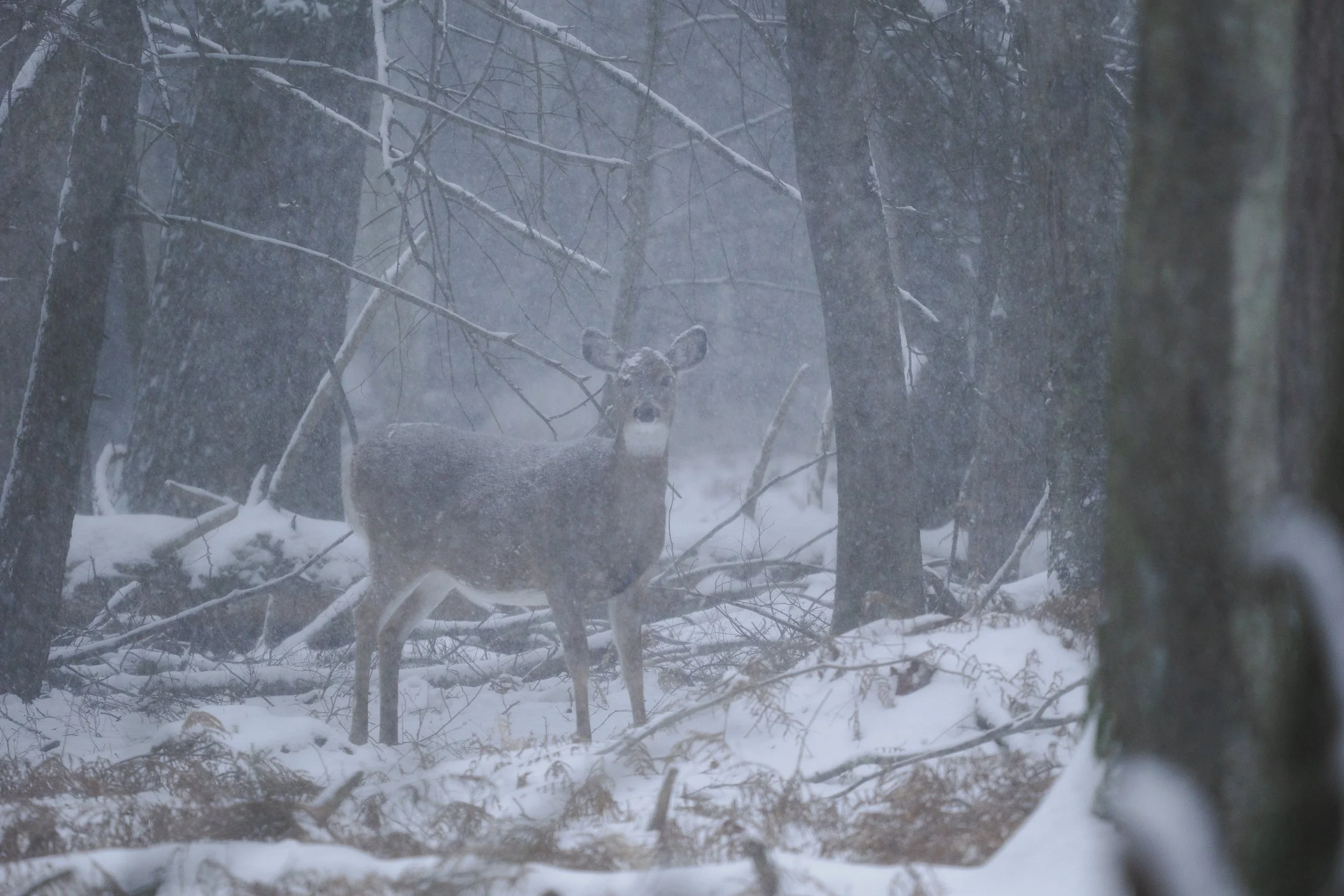
White-tailed deer photographed in heavy snow. Use of manual focus was required due to interference with snow.
400mm f/4.5 1/250 ISO 1250
Manual Focus for Moving Subjects (Yes, Really)
While this may sound counterintuitive, I have found my keeper rate is much higher using manual focus with peaking during snow storms, even on moving subjects, rather than trying to rely on continuous autofocus.
No matter the brand, your camera will likely struggle autofocusing in heavy snow, there is just too much interference.
With manual focus:
You control what's in focus
You are no longer fighting the camera
Autofocus errors no longer result in missed shots
Another bonus! The more you use manual focus, the better you get at it.
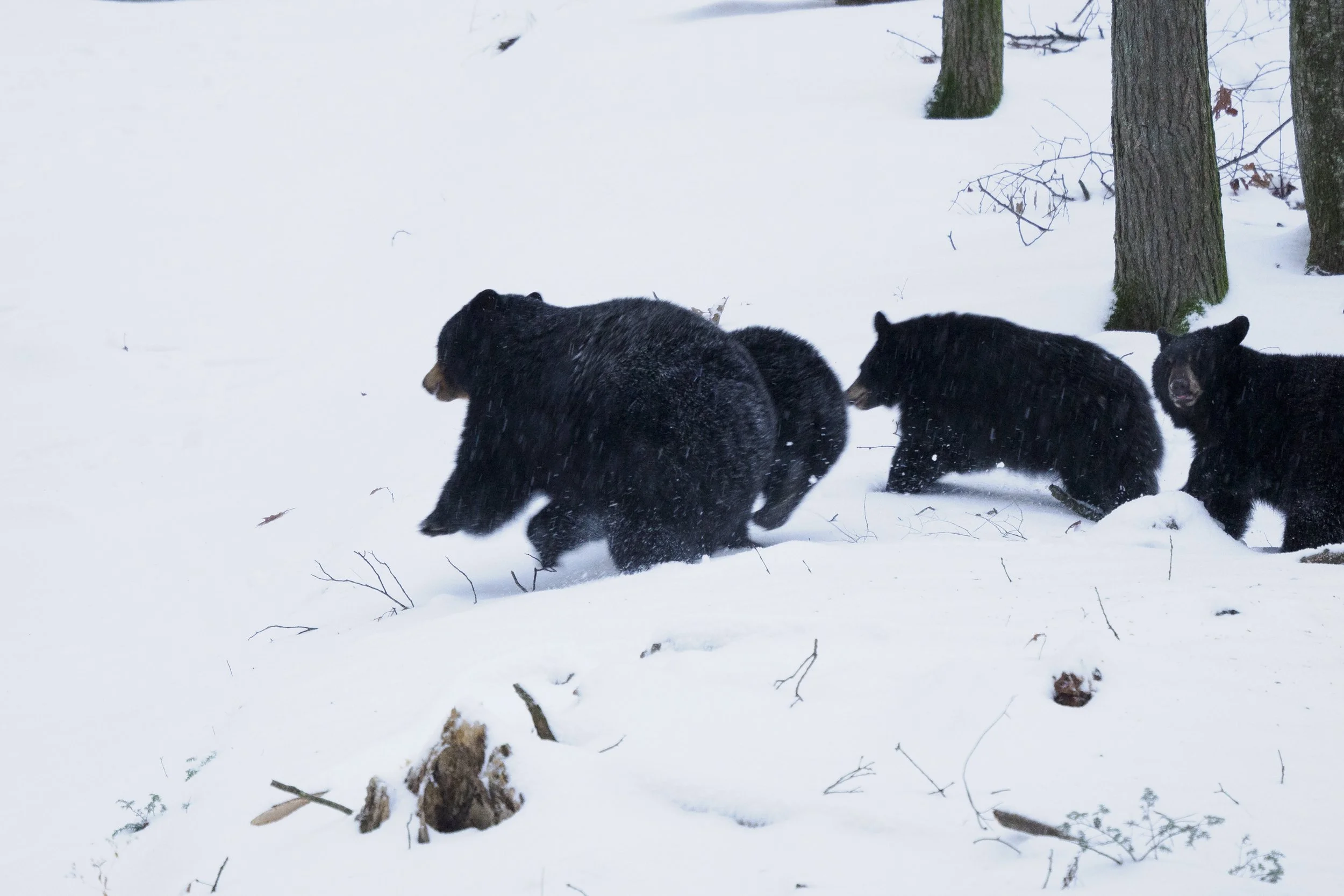
Black Bear family running through the forest during a snowstorm. Using manual focus in this instance ensured the focusing didn’t get confused by the falling snow and ice.
189mm f/4.5 1/160 ISO 4000
Using Focus Magnification to Confirm Sharpness
Another tip when using manual focus is to also use the magnifying option if equipped in your camera. I have this programmed to a button on my camera so I can quickly hit it to confirm focus on my subject.
This really helps when using manual focus, and it also helps to cut through some of the snow that may be blocking your view of the subject.
Final Thoughts
Photographing in the snow can be a really rewarding experience and provide the opportunity to witness some really incredible wildlife behavior. Snow adds atmosphere, context, and seasonality that is hard to replicate in any other season.
Don’t let the challenges of focusing during a storm keep you inside. Test out these tips and techniques yourself and experiment to see what will work best for you.
Key Takeaways:
During a snow storm:
Use back button autofocus
Start with pulsing autofocus method
Revert to manual focus if needed
Turn on peaking
Use magnification to confirm focus
Watch It in Action
If you want to see me out in the season's first snow, check out my YouTube Video where I photograph white-tailed deer and black bear in the season's first measurable snow. You will see first hand how I handle the snowy conditions and see one of my most memorable bear encounters!
If you haven't already, please consider subscribing to my Youtube channel and signing up for my monthly newsletter, The Wildlife Lens: Field Notes & Gear Tips, where I share observations from the field, behind-the-scenes lessons, and practical photography tips throughout the year.
Until then-
See you in the field,
Todd