
The Fastest Way to Improve Your Wildlife Photography (Without Buying More Gear)
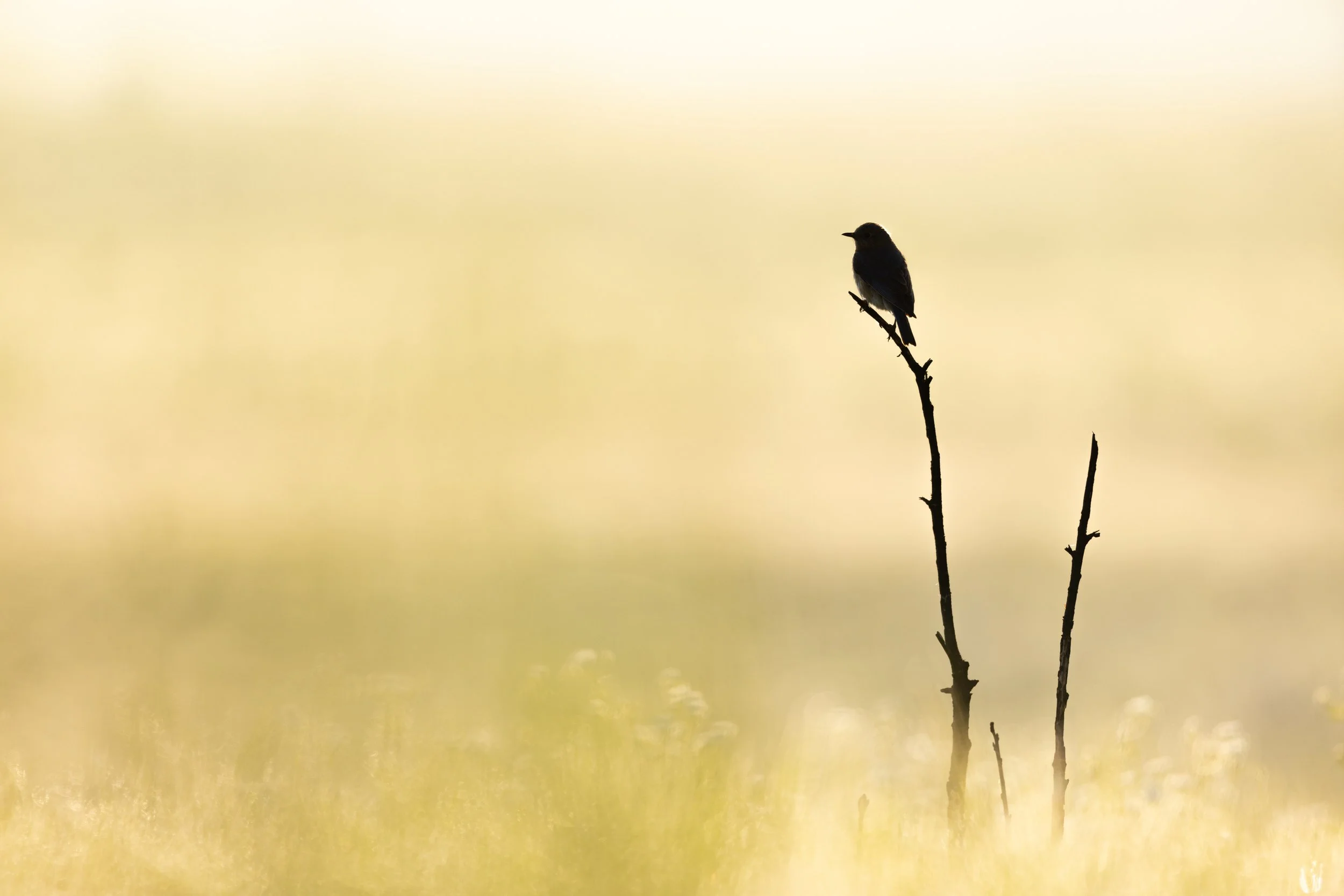
I noticed a flock of Eastern Bluebirds (Sialia sialis) perching and foraging from these tall burnt shrubs in the grassland. I positioned myself with the rising sun behind the bird to silhouette the bird and take advantage of the sun turning the grasses bright yellow. I waited for the bird to turn his head to get the full profile. This image ties together camera settings, positioning, bird behavior, and taking advantage of a simple composition to make the image work.
I remember when I first started wildlife photography. Every outing there was so much to learn and would be able to see improvement in my images in a short amount of time.
Then something changed.
The progress I could see slowed. I came home with fewer images that I was excited about and the “growth” that I had seen early on was slowing.
This is a story that I hear with many of my mentorship, guided session, and image review clients. This is a completely normal process and the fastest way to break through this cycle is by having a more experienced photographer review your images.

Why Photographers Plateau:
Photography is an interesting art form. One half of it is very technical, needing the knowledge and expertise to know how and when to adjust camera settings in order to capture the moment in front of you. The other half is purely creative, taking your vision and unique perspective, and using the light to create an image.
Learning photography is similar to learning a music instrument.
Learning exposure is like learning scales.
Learning focus is learning chords.
Composition is like playing songs.
Understanding wildlife behavior is like being able to improvise and write your own songs.
Each of these stages takes time to learn and master, and it is after each one of these learning hurdles that you see the most growth and improvement. For many, it takes years to move from learning each of these segments to the next.
It is also common that the progress, growth, and improvement that you see in your images slows the longer you are doing the art. With modern cameras, it is pretty common to see rapid progression in the images you can create, even in the first year of photography. After that initial jump, progress typically slows until you unlock the next level of growth, whatever that may be.
For me, it wasn’t until I mastered exposing images, that I was able to begin to recognize and work on my compositions.
Of course there are many different layers within each of these learning segments, and some may take longer to master than others. For example, within learning composition: background and foreground elements, lighting, position of subject, position of photographer, approach, can all be individual aspects where a photographer can improve upon.
You may choose to take courses, others may teach themselves. There is no right or wrong way to learn and photography itself is subjective, so the area between right and wrong is naturally a gray area.
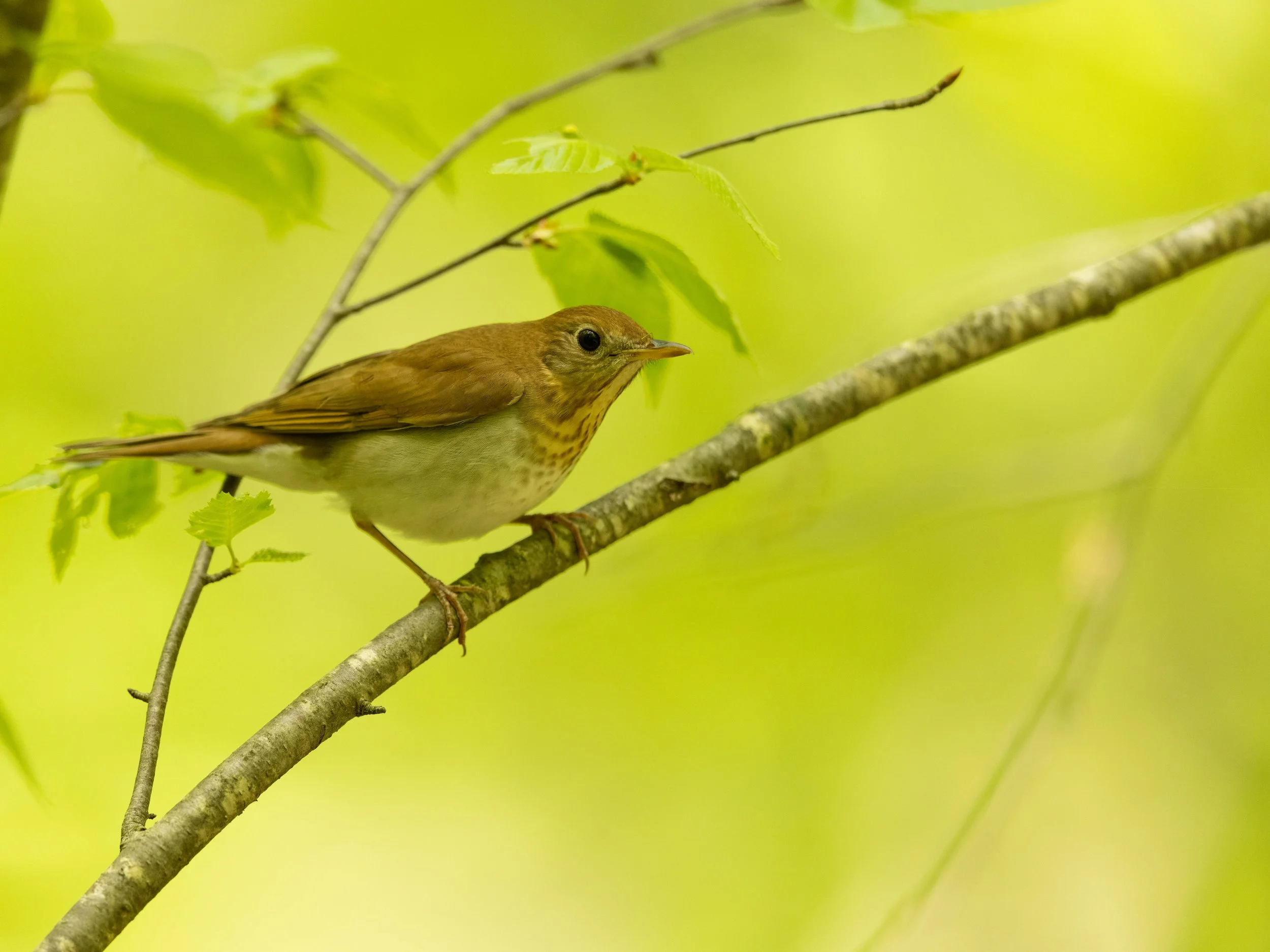
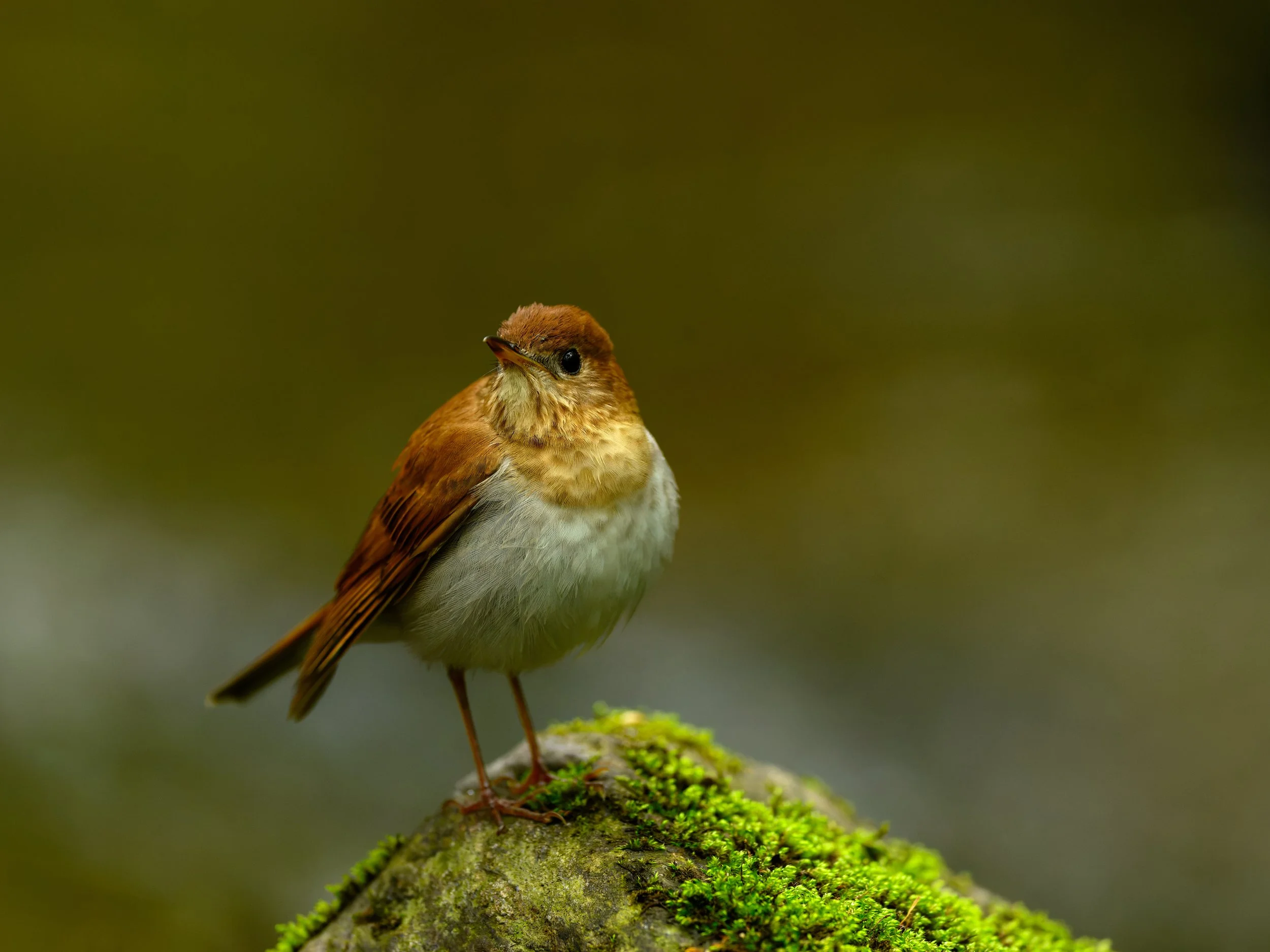
Both photos above show a Veery (Catharsis fuscescens). The one on the left shows the bird mixed in with branches and leaves that distract from the bird. The leaf above and behind the bird particularly distract from the bird and draw your eye away from the subject. The photo on the right shows an image taken down low showing the bird as it was perched on a rock. The low angle pushes the background away making the bird as the subject really stand out. The slight head turn allowed for catch light in the eye and the bird’s pose is much more relaxed and natural. By understanding the bird’s foraging behavior, I could position myself low and wait for the bird to land nearby to forage, paying attention to my background.
Why Image Reviews Accelerate Improvement:
No matter which way you choose to learn photography, there are a few ways that help you learn photography at an accelerated pace.
One of those ways is by submitting your images for review by a more experienced photographer.
When it comes to wildlife photography, there are many aspects that may make an image worth remembering. There is the technical side, which you can learn from any type of photography, but there is also the behavioral side.
A portrait photographer can tell you your background is distracting.
A wildlife photographer can tell you that if you positioned yourself six feet to your left and waited another few seconds, the duck would have likely paddled into beautiful morning light with a clean background.
That type of feedback isn't about editing or camera settings, it is about understanding how wildlife behaves in the field.
For wildlife photographers, there is so much more to an image than simply understanding camera setting and photography “rules”.
That is why, for wildlife photographers, it is best to not only find an experienced photographer to review your images, but also find someone who is knowledgeable about wildlife behavior.
If you want to see an example of an image review I did of one of my own images, check out my Wildlife Photography Image Review Page to watch a video review.
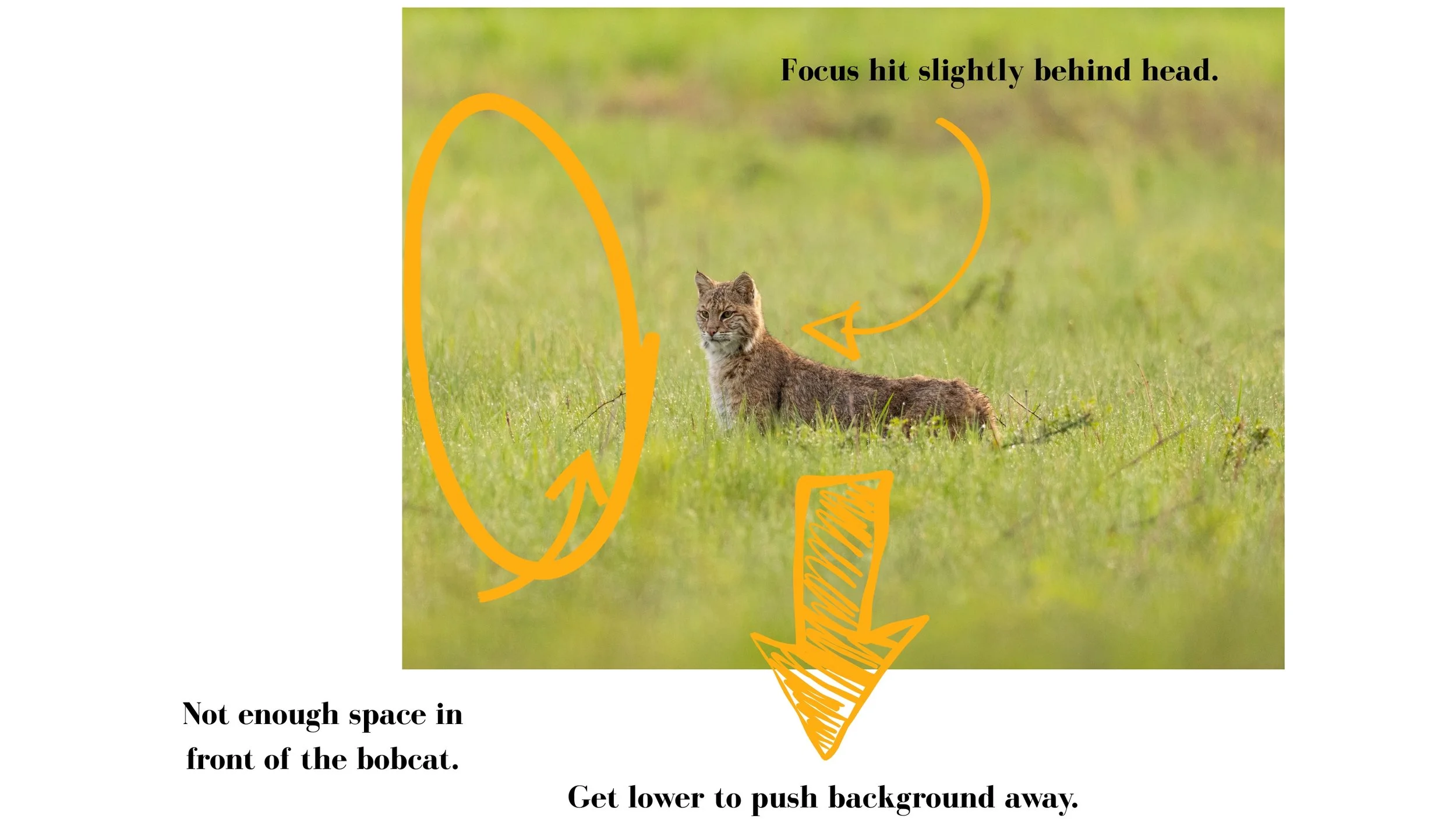
This image is a good example of what happens when you get too excited about the subject you have found and forget how to take good photos. I was coming home and noticed this bobcat was walking in a field across from my house. I rushed inside to grab my camera and went out to the front yard with the bobcat now only about 50 feet on the other side of the road. The bobcat was slowly moving through the grass hunting. She couldn’t care less I was there. I was rushing, not making sure I had focus, I didn’t position the cat properly in the frame, and I didn’t pay attention to how I was positioning myself. This is a common problem especially when just starting out in wildlife photography. We become so focused on the subject that we forget about the rest of the image. I sat there with the cat only a few feet from me taking over a hundred photos, all practically the same, and only ending up with a handful worth editing. What I should have done was move to a different position to get a better angle, ensure I had focus and work on composition. Image reviews and mentorships give you the tools to recognize what you are doing wrong, to minimize the missed opportunities in the field.
Images reviews are great for all levels of photographers. They are especially helpful when you are just starting out, to help you truly accelerate your learning and identify what is and is not working in your images. This allows you to focus on the aspects where you can improve the most.
As you progress in your art, it is common to develop blind spots for our images, and it gets hard to identify where there is room for improvement. Having another set of eyes to review your images can reveal these blind spots and help you adjust how you can take your images to the next level.
If you truly want to improve, photo reviews are one of the easiest ways to do so without spending hundreds or thousands on courses or wasting hours trudging through online videos. They can also help you break your bad habits quickly, and build better habits to get the images we imagine.
The great thing about photography is there is always room for experimenting and improving, and with the help of an image review, you can progress much more rapidly. Image reviews also provide direct feedback to your images. You can watch hours of videos and take courses to try to improve your photography, but many of those services do not allow you to directly see how the concepts taught can be applied to your images.
What happens During an Image Review:
When many people hear image review, there is a sudden apprehension that you do not want someone else to look at your work.
What if my images aren’t good enough?
What if they don’t like them?
What if I’m embarrassed?
All those thoughts are completely normal.
An image review should be centered on constructive feedback with actionable advice to help you improve your photos. For that purpose it is important to find someone to review your images whom you trust and respect. It is important to not become defensive when listening to the feedback from an image review.
Ideally, the image review will break down your image in several parts.
What worked well
What can be improved
What can be worked on the next time out in the field
The last part is the really important one, because constructive feedback is only useful when you know how to apply it in real life.
The feedback from an image review is typically received in a written or video format, and it is best to get the feedback in a manner that helps you learn from the feedback in the best way possible.
What Professionals Actually Evaluate:
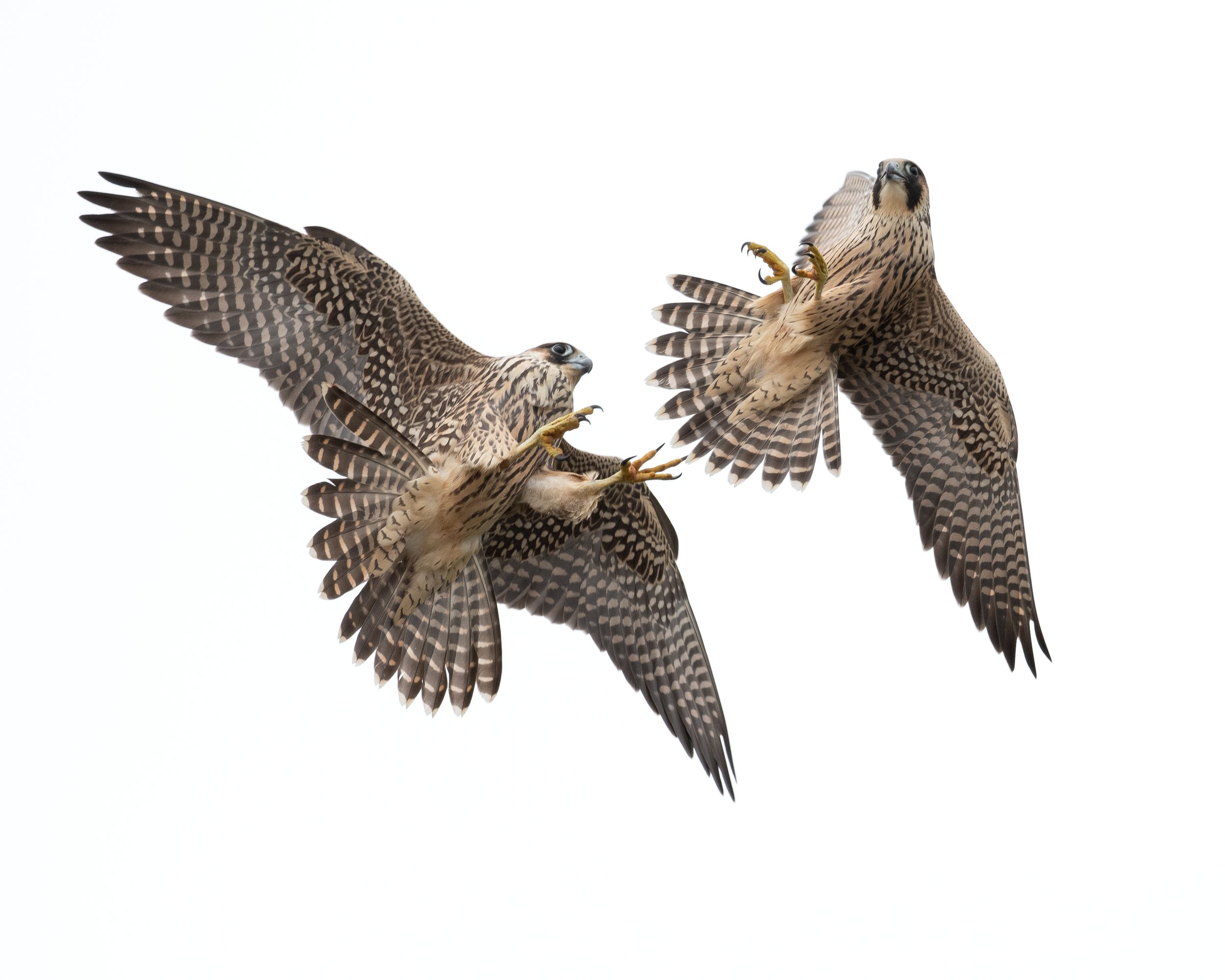
This pair of Peregrine Falcons (Falco peregrinus) had recently fledged and they were flying about chasing everything they could find along the beach. I sat there waiting with my camera settings dialed in, waiting for the pair to come towards me in a position where I could get a clean background. Eventually everything came together and I managed to get this photo. One falcon has her wings fully outstretched as they were trying to lock talons. A few minutes of observation, allowed me to possition myself in the right place to have this opportunity. This image went on to be in the top 100 bird images in the 2023 NANPA Awards.
There are many parts of an image that can be evaluated. Besides the technical aspects of exposure and proper shutter speeds, here are some other key things I look for.
Does the subject stand out?
Can you immediately identify the subject, or does your eye get pulled toward other elements in the image?
Are there any distractions?
Are there elements in the background that are distracting? Is the foreground helping or hurting the image?
How is the light used?
Does the light add depth, mood, texture, or is it flattening the subject?
What story is the image telling?
Are there missing elements in the story?
Is the photographer's placement the best for the subject?
Should the photo be taken at a lower/higher angle?
Was the photo captured at the best moment?
Does the photo capture an interesting moment, eye contact, or action?
Do the colors of the image work?
Do the colors compliment one another or do they take away from the subject?
Common Mistakes in Wildlife Photography:
These are some of the common mistakes I see when reviewing my own images, and also after reviewing images from my clients:
Being too close or too far away from the subject
Missing the best moment to take the photo
Distracting background
Too much clutter in the image
Improper camera settings (typically shutter speed)
Not using the best light
Improper positioning for the subject
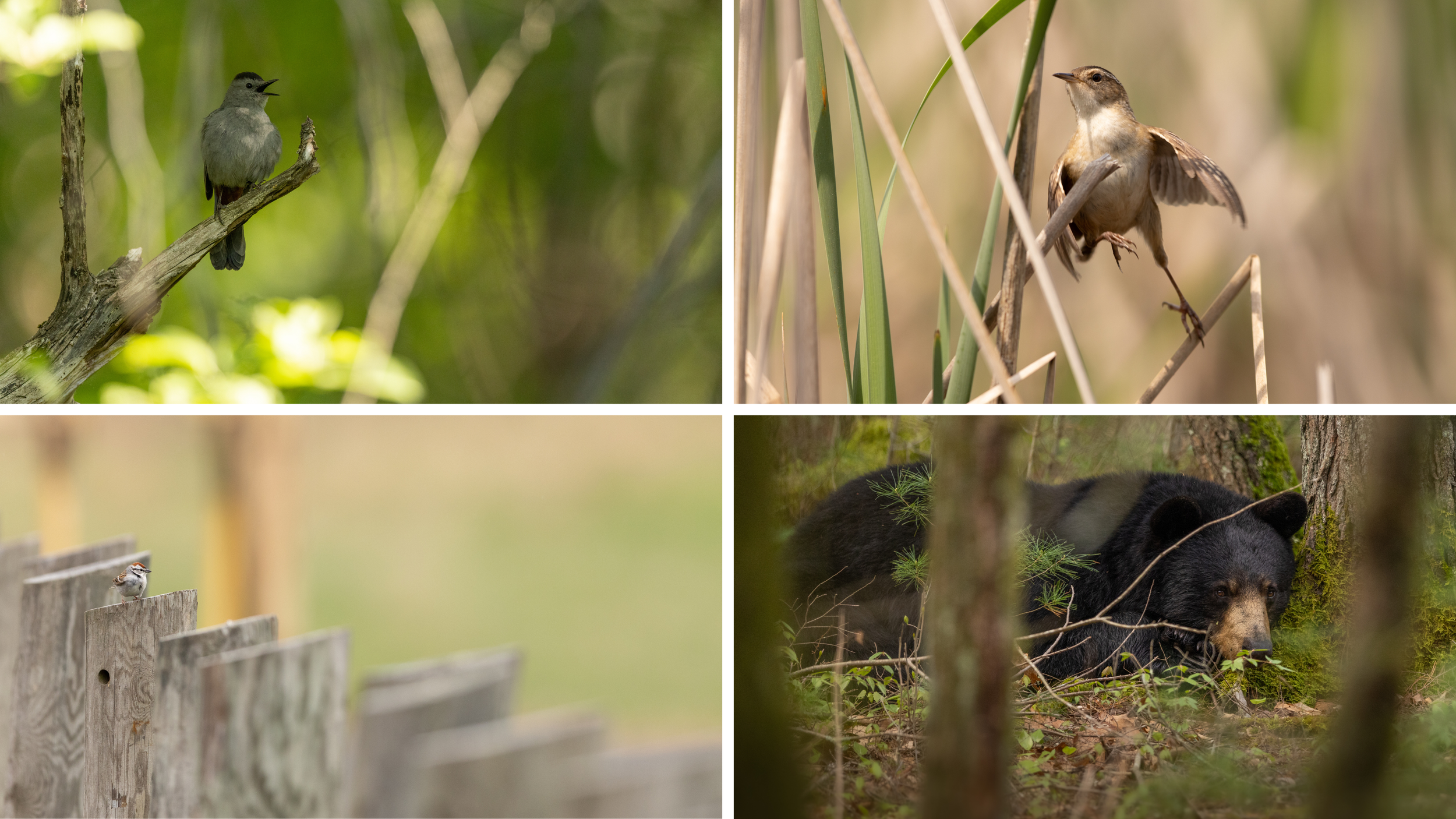
Top Left Photo: I was trying to capture the Gray Catbird (Dumetella carolinensis) singing. However the lighting did not do the image any favors. The subject is in shadow and the vegetation in the foreground is the brightest part of the image catching your eye and distracting from the bird.
Top Right Photo: This Marsh Wren (Cistothorus palustris) was moving about among the reeds. I was trying to capture the movement but my shutter speed was not high enough to freeze the motion. I also lost focus just as the bird started to move and because the bird moved upward, they are too close to being cut off by the top of the image.
Bottom Left Photo: I was trying to use the fence posts to add depth to image, however they ended up making the image too busy and almost hiding the true subject, which was the small Chipping Sparrow (Spizella passerina) perched on top.
Bottom Right Photo: For this image, almost everything lined up. The dramatic subject was there with this sow American Black Bear (Ursus americanus) laying at the base of this tree as her two cubs slept nearby. The image captures the mother’s tired but vigilant expression. The issue was the framing and distracting elements. I was positioned on the opposite bank of this family and was shooting through all kinds of sticks and brush. As a result, the image makes it look as if you are looking through bars taking away from the overall feel of the image. This is a good example that not every encounter can create great images, even if you have the right subject and emotion.
Who Are Image Reviews For?
Image reviews are for people who are serious about improving their photography, and want to do so in as quickly a manner as possible. No matter how long you have been photographing, we can all benefit from a fresh set of eyes looking at our images. A great benefit to image reviews is once you become aware of the areas to improve on, you can self evaluate your progress, and begin to review your own images. With a little practice, you will be able to review your images even before you take the photo and you will be able to see the image you want to create before you even raise the camera.
If you've reached a point where your photography feels stuck, an image review can often reveal the next step forward in just a few minutes.
Whether you're struggling with composition, timing, camera settings, or understanding wildlife behavior, personalized feedback gives you clear, actionable steps you can apply on your very next outing.
I currently offer both written and video wildlife photography image reviews, along with one-on-one mentorship sessions for photographers looking for more in-depth guidance.
If you'd like to learn more, you can explore both options below.
Mentorship Services:
Image Review Services:
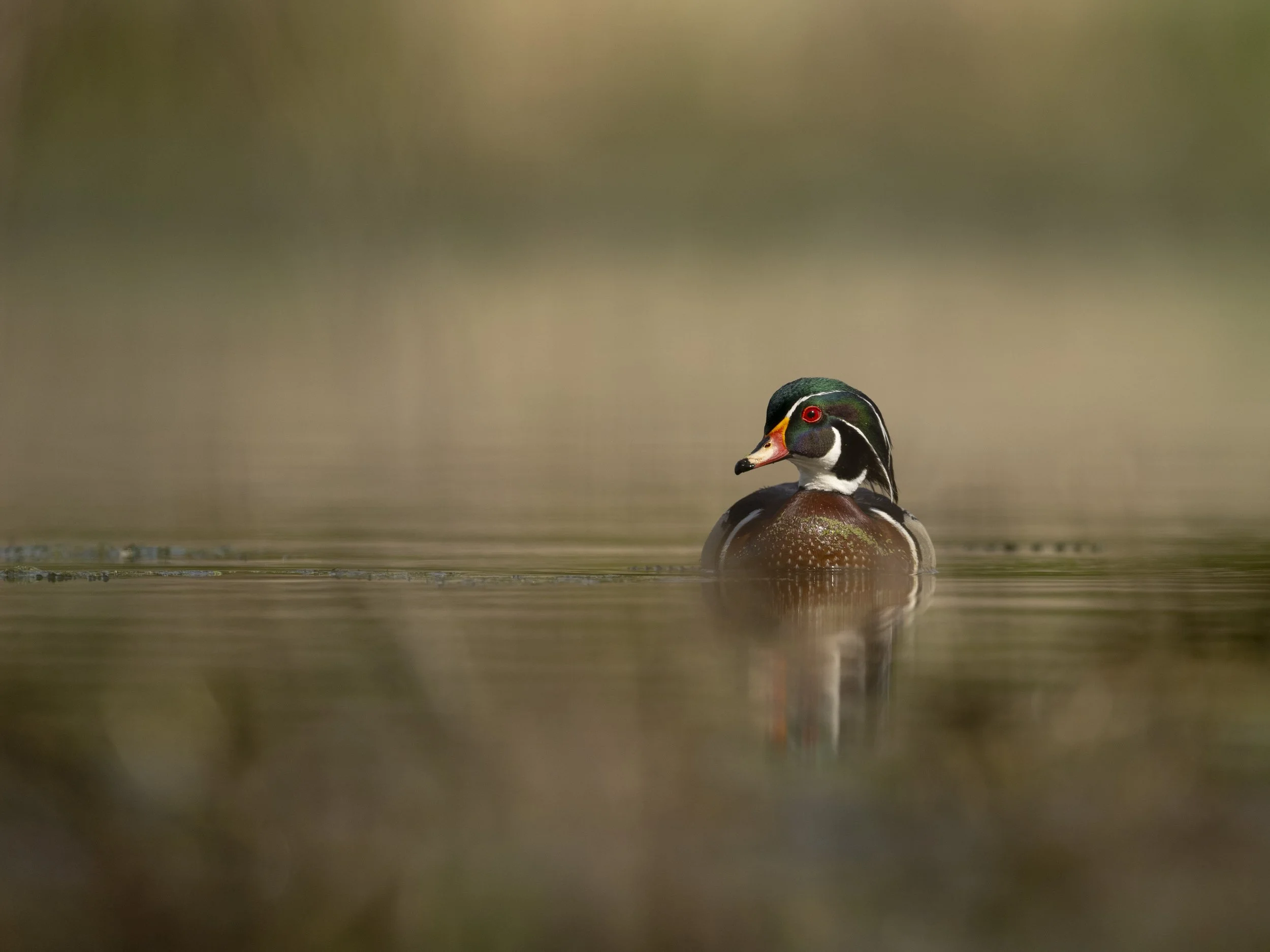
I was laying on the banks of the wetland but was still a foot or so above water level. I used the foreground vegetation to blur out the ripples in the water and positioned the Wood Duck (Aix sponsa) as if he was rising out of the foreground. The lighter background from the reeds helps to draw attention to the males bright green head plumage. I waited for the male to approach and turn his head slightly so the sunlight could catch the colors in his feathers and highlight the bright red eye.