
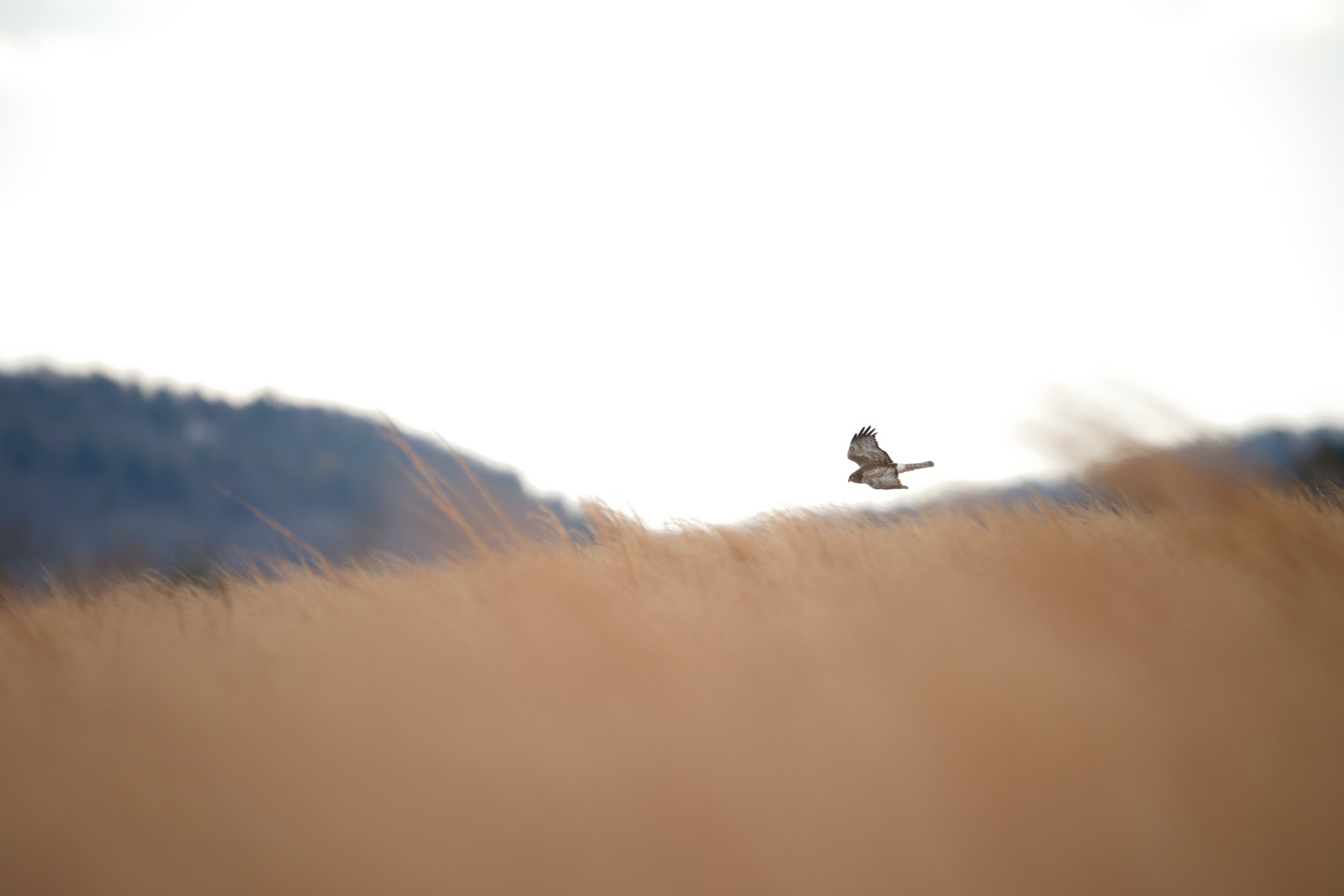
Northern Harrier Field Workshop
Learn to Read the Grasslands | Anticipate the Birds | Make Better Photographs
A private, one-on-one full-day photography workshop focused on Northern Harriers, wildlife behavior, habitats and the field craft that can turn fleeting opportunities into better photographs.
Inaugural Season - $995
Select Sundays | October - March | One Photographer
Workshop Dates:
October 18th | November 8th | November 15th | December 13th | January 10th | January 24th | February 7th | February 21st
This is More Than a Day Photographing Harriers
Northern Harriers are challenging subjects.
They move quickly, hunt low over the grasslands, change direction without warning, and can disappear from view just as quickly as they appear.
Getting consistently good photographs isn't simply about having the right camera and a long lens.
It starts with understanding the landscape and the animal.
During this private experience, we'll spend an entire day in the field learning how I approach these grasslands, how I interpret Harrier behavior, and how I use that information to anticipate photographic opportunities.
My background in fisheries and wildlife science, combined with years of photographing wildlife throughout New England, has taught me to approach wildlife photography from both sides of the equation:
Understand the wildlife. Then use that knowledge to improve the photography.
The Difference is Field Craft
Anyone can tell you which autofocus mode to use or what shutter speed to set.
Those things matter—but they aren't what this experience is built around.
The biggest difference in my approach is field craft: understanding where to be, when to move, when to stay put, what the wildlife is telling you, and how the habitat and conditions are likely to influence what happens next.
Throughout the day, we'll work on:
-
Learn how the structure of the grasslands influences where Harriers hunt and travel, and how to identify areas that are more likely to produce opportunities.
-
Learn to recognize hunting patterns, flight paths, changes in behavior, and subtle clues that can help you anticipate what a bird may do next.
-
Learn how your position, movement, background, and relationship to the light can affect the photographs you're able to make.
-
Instead of simply raising your camera when a Harrier appears, learn to recognize situations where a photographic opportunity is developing before it happens.
-
Light, wind, clouds, and weather all affect wildlife behavior and the photographs you can create. Learn how to adapt rather than waiting for perfect conditions.
What to Expect
-
A FULL DAY IN THE FIELD
Sunrise: Observe & Photograph
We'll meet before sunrise and begin working the grasslands as the day begins.
The morning will focus on observing the habitat and wildlife while taking advantage of the early light and activity.
As opportunities develop, we'll work on positioning, exposure, autofocus, flight photography, backgrounds, and—most importantly—anticipating the birds rather than simply reacting to them.
The field is the classroom.
Midday: Refuel & Review
After several hours in the field, we'll take a break for lunch at a nearby coffee and sandwich shop.
This isn't simply a break from photography.
We'll use the time to look back at what we experienced during the morning and discuss:
What worked
What didn't
What opportunities we may have missed
What the birds were doing
How positioning affected your images
What you can change during the afternoon
We'll also spend some time reviewing and editing images from the morning.
Then we'll head back into the field with a better understanding of what we've learned.
Afternoon: Put It Into Practice
The afternoon becomes an opportunity to apply everything from the morning.
We'll refine our approach based on the birds, the habitat, and the conditions we're seeing that day.
I'll help you recognize opportunities, anticipate movement, improve positioning, and make more deliberate photographic decisions.
Observe. Photograph. Analyze. Adjust.
We'll continue photographing through the afternoon and into the evening, taking advantage of the changing light and the final opportunities of the day.
-
The goal isn't simply to come home with more photographs.
It's to leave with a better understanding of how to think in the field.
By the end of the experience, you'll have practiced:
Reading wildlife habitat
Interpreting Northern Harrier behavior
Anticipating animal movement
Making better positioning decisions
Working with changing light
Improving your flight photography
Adapting to changing conditions
Thinking about the photograph before it happens
These are skills you can take with you to other wildlife photography situations long after the Harriers have left the grasslands.
-
This workshop is designed to provide a unique look at the wildlife of Connecticut and Massachusetts. This workshop is designed for those looking to spend time developing compositions with subjects rather than simply getting the shot and moving on to the next subject. This workshop is not designed for someone looking to check off a bunch of bird species from their list.
We will be observing wildlife, taking time to discover the best locations to capture images, while letting the wildlife become accustomed to our presence to provide natural behaviors.
-
Description text goes here
-
Item description
A Full Day In the Field
Midday: Refuel & Review
After several hours in the field, we'll take a break for lunch at a nearby coffee and sandwich shop.
This isn't simply a break from photography.
We'll use the time to look back at what we experienced during the morning and discuss:
What worked
What didn't
What opportunities we may have missed
What the birds were doing
How positioning affected your images
What you can change during the afternoon
We'll also spend some time reviewing and editing images from the morning.
Then we'll head back into the field with a better understanding of what we've learned.
Sunrise: Observe & Photograph
We'll meet before sunrise and begin working the grasslands as the day begins.
The morning will focus on observing the habitat and wildlife while taking advantage of the early light and activity.
As opportunities develop, we'll work on positioning, exposure, autofocus, flight photography, backgrounds, and—most importantly—anticipating the birds rather than simply reacting to them.
The field is the classroom.
Afternoon: Put It Into Practice
The afternoon becomes an opportunity to apply everything from the morning.
We'll refine our approach based on the birds, the habitat, and the conditions we're seeing that day.
I'll help you recognize opportunities, anticipate movement, improve positioning, and make more deliberate photographic decisions.
Observe. Photograph. Analyze. Adjust.
We'll continue photographing through the afternoon and into the evening, taking advantage of the changing light and the final opportunities of the day.
What You’ll Take Away
The goal isn't simply to come home with more photographs.
It's to leave with a better understanding of how to think in the field.
By the end of the experience, you'll have practiced:
Reading wildlife habitat
Interpreting Northern Harrier behavior
Anticipating animal movement
Making better positioning decisions
Working with changing light
Improving your flight photography
Adapting to changing conditions
Thinking about the photograph before it happens
These are skills you can take with you to other wildlife photography situations long after the Harriers have left the grasslands.
Why One-on-One?
Because Wildlife Doesn't Always Cooperate With a Crowd.
This experience is intentionally limited to one photographer per date.
Northern Harriers are wild animals, and our presence can influence their behavior. Keeping the experience private allows us to move carefully through the habitat and make decisions based on the birds rather than the needs of a larger group.
It also means that my attention is focused entirely on you and your photography.
If you're struggling with a technique, missing opportunities, or trying to understand what you're seeing, we can stop and work through it together.
This isn't a group lecture.
It's a full day of personalized field instruction.
Your Experience Starts Before Sunrise
One-Hour Pre-Experience Planning Call
Approximately one week before your field experience, we'll meet virtually via Google Meet for up to one hour.
The goal is to make sure we're on the same page before we meet.
When you arrive before sunrise, we're ready to photograph.
-
Your photography goals
Your equipment
Your experience level
The types of photographs you want to create
Camera setup
Autofocus and shooting settings
Field clothing and gear
What to expect
Our approach for the day
Current conditions and activity
What’s Included:
-
The entire experience is dedicated to you and your photography. There is no need to worry if you will get the attention you need.
-
This experience runs from sunrise to sunset. Total hours depends on season and weather conditions.
-
Learn how habitat, behavior, positioning, and environmental conditions influence photographic opportunities.
-
Lunch at a nearby coffee/sandwich shop is included.
-
Review images from the morning and discuss how to improve your approach and final photographs.
-
A private one-hour Google Meet session before your field experience. This gets us both on the same page so we can take advantage of the early morning activity.
Limited Inaugural- Session Dates
Northern Harriers are a seasonal opportunity, and this experience is only offered on select Sundays due to hunting in the area on other days of the week.
October through March
2026-27 Field Season
Sunday, October 18th - Available
Sunday, November 8th - Available
Sunday, November 15th - Available
Sunday, December 13th - Available
Sunday, January 10th - Available
Sunday, January 24th - Available
Sunday, February 7th - Available
Sunday, February 21st - Available
Inaugural-Season Pricing
$995
Regular Price: $1,095
This is the first season I'm offering the Northern Harrier Photography Experience in this format.
I'm offering the inaugural dates at a special introductory rate while I refine and develop the experience.
Future seasons will be offered at the regular $1,095 rate.
A $250 deposit reserves your date.
The remaining balance is due 21 days before the experience.
Wildlife Photography is Unpredictable
Northern Harriers are wild animals, and sightings, behavior, and photographic opportunities cannot be guaranteed.
Weather and wildlife activity can change the character of a day in the field.
That's part of wildlife photography—and part of what you'll learn.
We'll work with the conditions we have, while always prioritizing the welfare of the birds and the integrity of the habitat.
If dangerous conditions or weather that would make the experience substantially unproductive are forecast, the experience may be rescheduled.
The birds set the schedule. We adapt.
Ready to Learn How to Find the Photograph?
Spend a full day learning not just how to photograph Northern Harriers, but how to read the landscape, understand the wildlife, and make better decisions in the field.
One photographer. One day. One-on-one instruction.